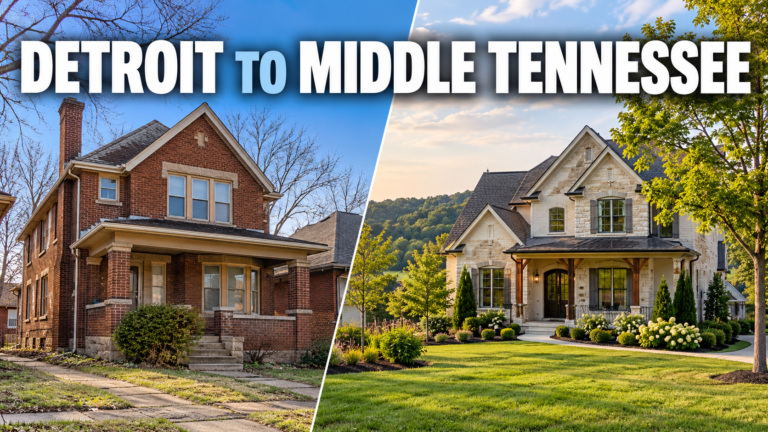
What a Las Vegas Home Budget Buys in Middle Tennessee

What a Las Vegas home budget buys in Middle Tennessee depends on your available proceeds, financing and the balance you choose among location, condition, layout and outdoor space. Compare the full cost of owning specific homes rather than assuming a fixed exchange between markets. A larger yard or different setting can be appealing while changing the maintenance and travel your ordinary week requires.
Last updated: September 30, 2026. Dollar examples are hypothetical planning brackets, not current listings or guarantees of availability.
Local perspective: I’m Harley Pope, a lifelong Middle Tennessee local and a Realtor with Pope Real Estate Group at The Baker Brokerage. Victoria and I help relocating buyers compare actual homes and build a manageable sale-and-purchase timeline.
Establish the funds your Nevada sale will provide
Ask your Las Vegas-area agent for a supported sale range and an itemized estimate of proceeds after loan payoffs, agreed expenses, preparation and possible concessions. Include a conservative case. The value attached to the property on a website is not the cash available for a Tennessee down payment.
Reserve moving, storage, temporary lodging and first-year repair funds. If you plan to keep the Nevada home, have the lender evaluate the existing payment and any proposed rental income treatment. Maintenance and management obligations remain part of the household budget even when a tenant may contribute income.
The Las Vegas-to-Nashville relocation guide provides broader orientation. Use it alongside the financial review so the Tennessee search starts with available funds and realistic timing rather than a hoped-for sale result.
What a Las Vegas home budget buys in Middle Tennessee begins with your routine
Describe the house and functions you are leaving. If a pool, covered patio or particular garage arrangement is important, explain the use rather than simply listing the feature. If your current property is an attached home or an older detached house, the useful baseline will be different again.
Identify what you want to preserve and what you want to change. Perhaps the goal is more indoor room separation, a different outdoor setting or less upkeep. More square footage or acreage can conflict with a goal of simpler ownership, so choose the intended gain before expanding the search.
Write down regular destinations, work patterns and recurring trips. A property should support those needs at a full payment you can carry. The move is an opportunity to choose deliberately, not a reason to assume every Tennessee feature is an improvement over the Nevada home.

Put illustrative price brackets to work
Choose planning brackets relevant to your funds, such as $400,000, $600,000 and $850,000. They are hypothetical search points, not claims that a specific home type is currently available in a named Tennessee community. Compare representative current listings on the same date and record the actual tradeoffs.
At an illustrative 20 percent down, those purchase amounts require $80,000, $120,000 and $170,000 for the down payment, before closing costs and reserves. Your financing can use another structure. This arithmetic shows how a larger purchase changes cash retained for the transition and ownership.
Ask the lender to quote the scenarios you would consider, then compare condition, useful rooms, location and monthly cost. A lower asking price that needs substantial work may not provide the savings it first suggests. A citywide statistic cannot supply the repair budget or address-specific expenses for a particular house.
Begin Nashville searches with the destinations you will use
The Nashville area guide introduces the geography. Map actual work addresses, regular appointments and activities before drawing a broad search circle. Include the trips that remain when remote work reduces a traditional commute.
Test the routes at relevant times, and examine parking and access at candidate properties. Mileage and a pleasant weekend visit cannot establish the routine you will experience after the move. If two household members travel in different directions, compare both rather than optimizing only one trip.
Within Nashville, consider detached and attached alternatives at a comparable full cost. An older house, townhome and newer property can offer different combinations of location, control and maintenance. The budget should be evaluated against the actual product and your preferences rather than a blanket property-type rule.
Compare southern communities as distinct options
Brentwood and Franklin may be relevant when your daily destinations point south. Spring Hill and Columbia add other possibilities with their own property and route tradeoffs. Do not treat them as fixed budget tiers around Nashville.
Select two places and compare current houses that meet the same important functions. The Spring Hill versus Columbia guide can help structure a comparison if those locations fit. A larger home farther along a route should solve a real need rather than quietly increase everyday travel.
Verify the actual parcel’s county, services, taxes and restrictions. Spring Hill has Maury and Williamson county locations, so the city name does not answer every ownership question. Use the records and responsible providers for the exact address, especially when a service or assignment is essential to the purchase.
Investigate west-side and northwest choices on their merits
For a west-side routine, Dickson County may deserve attention. Ashland City provides a separate northwest comparison. They should be selected because the routes and properties fit your life, not because a general online description calls them universally affordable.
If more land attracts you, define its job. A garden, workshop, outdoor gathering area and private wooded setting have different requirements. Usability, slope, access, utilities and restrictions should be evaluated before deciding that the acreage figure represents buying power.
Limit the first tour to a few coherent directions. A regionwide list can make it difficult to understand why the properties differ in price and practical convenience. Expand only after the initial comparison identifies a specific need those locations do not meet.
Rebuild ownership expenses from the Tennessee address
The CFPB’s Loan Estimate overview explains projected loan payment and closing-cost information. Add property-specific taxes, insurance, dues, utilities and maintenance. Your current mortgage rate may make a lower-priced replacement carry a different payment than expected.
The Las Vegas versus Nashville cost comparison offers broader planning context. Obtain quotes for the actual Tennessee home rather than assuming a general state-level comparison establishes savings. A tax headline does not account for your loan, repair needs or everyday spending.
Separate recurring ownership expenses from the one-time move. Inspections, appraisal, moving, storage, temporary housing and immediate work draw from funds that may otherwise appear available for a larger purchase. Keep that reserve visible throughout the search so the house and transition remain manageable together.
Evaluate outdoor space as both benefit and obligation
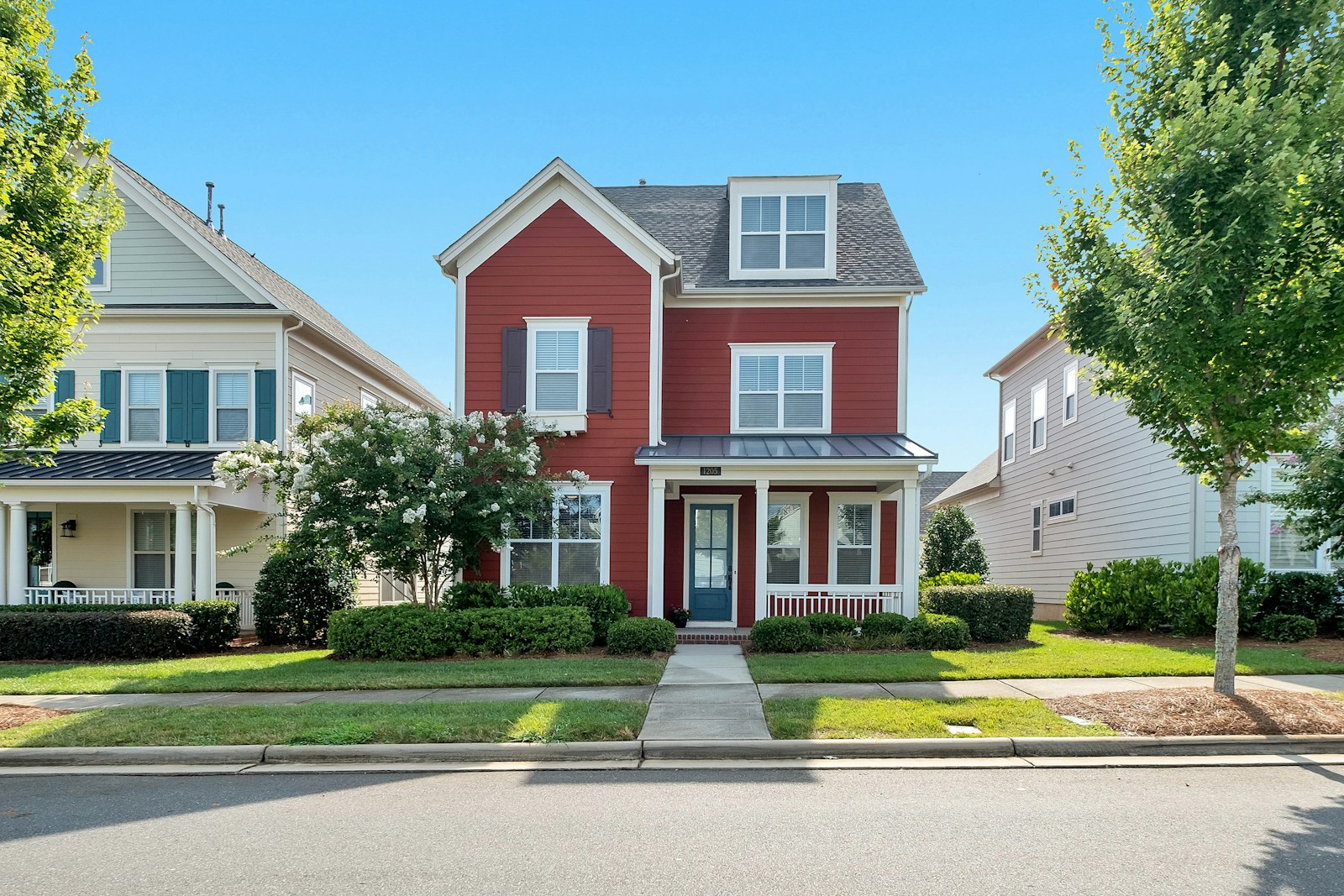
If a green yard or treed setting is part of the attraction, examine the ongoing work. Ask about lawn care, drainage, gutters, tree condition, exterior surfaces and any irrigation actually present. The property should be evaluated by its systems and site, not by an assumption that a different landscape takes care of itself.
Walk usable outdoor areas and check how they connect to the house. A large sloping lot may serve a different purpose from a smaller level yard. Covered space can be valuable if you will use it, but inspect its roof, structure and maintenance history like other improvements.
If you hope to add a pool, shop or other structure, verify the proposed use with the appropriate authorities and governing documents. Available-looking space is not proof of approval. Compare a home that already meets the need with the cost and uncertainty of making the change later.
Compare pools and specialty features individually
A pool can be attractive to one buyer and an unwanted obligation to another. If it matters to you, obtain qualified evaluation of its condition, equipment and required work. Request available service history and understand the ongoing costs before assigning it a substantial share of the budget.
If you would prefer to reduce maintenance, consider whether a home without that feature supports the move better. The value is personal utility combined with a sound purchase, not a rule that a property must reproduce your Nevada amenities. Keep essential functions separate from habits you are willing to change.
Apply the same method to outdoor kitchens, generators, detached buildings and other specialty equipment. Verify what is included and how it works. A feature that appears impressive in a listing can require service, inspection or replacement that changes the full ownership comparison.
Inspect systems and foundation spaces carefully
Review roof, drainage, grading, heating and cooling, plumbing, electrical systems and foundation areas with qualified providers within the appropriate scope. Request repair and service records. Your experience with the Nevada home is useful, but it does not establish the Tennessee property’s condition.
If there is a crawlspace, basement or private wastewater system, understand its maintenance needs and documentation. For significant concerns, obtain a realistic estimate rather than guessing from photographs. A freshly updated interior does not remove the need to examine the major systems supporting it.
Maintain a first-year reserve even after a favorable inspection. Findings can guide negotiation and the purchase decision, but they cannot guarantee no later repairs. A budget that leaves room to own the property is more useful than one that simply reaches the maximum loan approval.
Compare resale, new construction and attached options
For new construction, request the actual price of the specific house, included finishes, lot charges, completion schedule, warranty and written incentives. A model home’s appearance may differ from the advertised base package. Ask the lender how a proposed financing offer changes the full cost and which conditions apply.
For an attached property, review dues, reserves, insurance responsibilities, restrictions and known assessments. Some maintenance may be shared while other obligations remain with the owner. Compare the complete arrangement with a detached home rather than treating a fee as an isolated reason to rule it out.
For resale, examine condition and existing improvements that meet your needs. An established yard or included equipment can be useful, but it should be inspected and valued as part of the actual property. The strongest option comes from the comparison, not an automatic preference for one category.
Plan a trip that reveals the ordinary week
Before travel, share your payment limit, expected funds, timing and recurring destinations. Ask for a focused tour that tests a few meaningful alternatives. Start with location and property-type differences, then return to the strongest candidates after you understand what the budget gains and gives up.
Use the Tuesday Test: groceries, parking, deliveries, work space, laundry and recurring appointments. Drive the routes at useful times and inspect the outdoor areas you expect to use. A pleasant visit to Nashville does not by itself show whether the proposed address makes ordinary days work well.
Record payment, immediate work, useful rooms, lot obligations, route and unanswered questions. Remote follow-up can help compare visible details, but professional inspections and document checks still matter. Verify essential services at the address with the responsible provider before relying on them.
Coordinate the Nevada sale with the Tennessee purchase
Map the timeline with both agents, your lender and closing companies. Determine whether you must sell first, can carry overlap or should use temporary housing. A linked closing can be convenient when the dependencies are understood, but a delay can affect funds, movers and possession together.
Review offer terms as a whole: price, credits, financing, appraisal, inspections, sale contingencies, closing and possession. If the Nevada buyer negotiates different terms or the closing moves, update the Tennessee figures immediately. Expected proceeds are not available cash until the necessary funding steps occur.
The Middle Tennessee relocation page helps organize the move. A Nevada agent can coordinate through the referral partner resource. The goal is a specific purchase whose condition, costs and timing support the same practical plan.
Frequently Asked Questions
Will my Las Vegas budget buy a larger Tennessee yard?
It may for a particular property and location, but no fixed conversion exists. Compare current choices at the same full ownership cost and evaluate usable space, maintenance, restrictions and daily travel.
Should I require a pool if my current home has one?
Decide whether it remains important to your intended routine. If it is, obtain a qualified evaluation and budget for maintenance. If simpler ownership is a goal, a different outdoor arrangement may fit better.
Does a larger lot mean I can add a workshop?
No. Verify zoning, private restrictions, access, utilities and site conditions for the actual proposal. Compare the project with an existing suitable structure before committing funds based on an unconfirmed future use.
Can I use my Nevada monthly expenses to estimate Tennessee ownership?
Use them as a baseline for questions, then obtain property-specific quotes and estimates. The loan, tax, insurance, maintenance and travel costs can differ. A general savings assumption is not a household budget.
Is buying before selling the simplest move?
It can reduce temporary housing, but it may add financing and overlap costs. Ask the lender to evaluate the exact scenario and model a delay. The simpler physical move is not always the more manageable financial sequence.
About Harley Pope
Harley Pope is a lifelong Middle Tennessee local and a Realtor with Pope Real Estate Group at The Baker Brokerage. He serves Nashville, Dickson County, Maury County and surrounding markets, helping relocating buyers compare condition, total ownership cost, outdoor utility and daily routes. He emphasizes clear property information and a purchase timeline coordinated with the existing-home sale so the move supports the client’s practical priorities.
Harley and Victoria Pope can help translate your Las Vegas budget into a focused Middle Tennessee search. Contact Pope Real Estate Group with your timing, payment range and the changes you want the move to make possible.