Charlotte Communities and Rural Properties: What Home Buyers Should Know
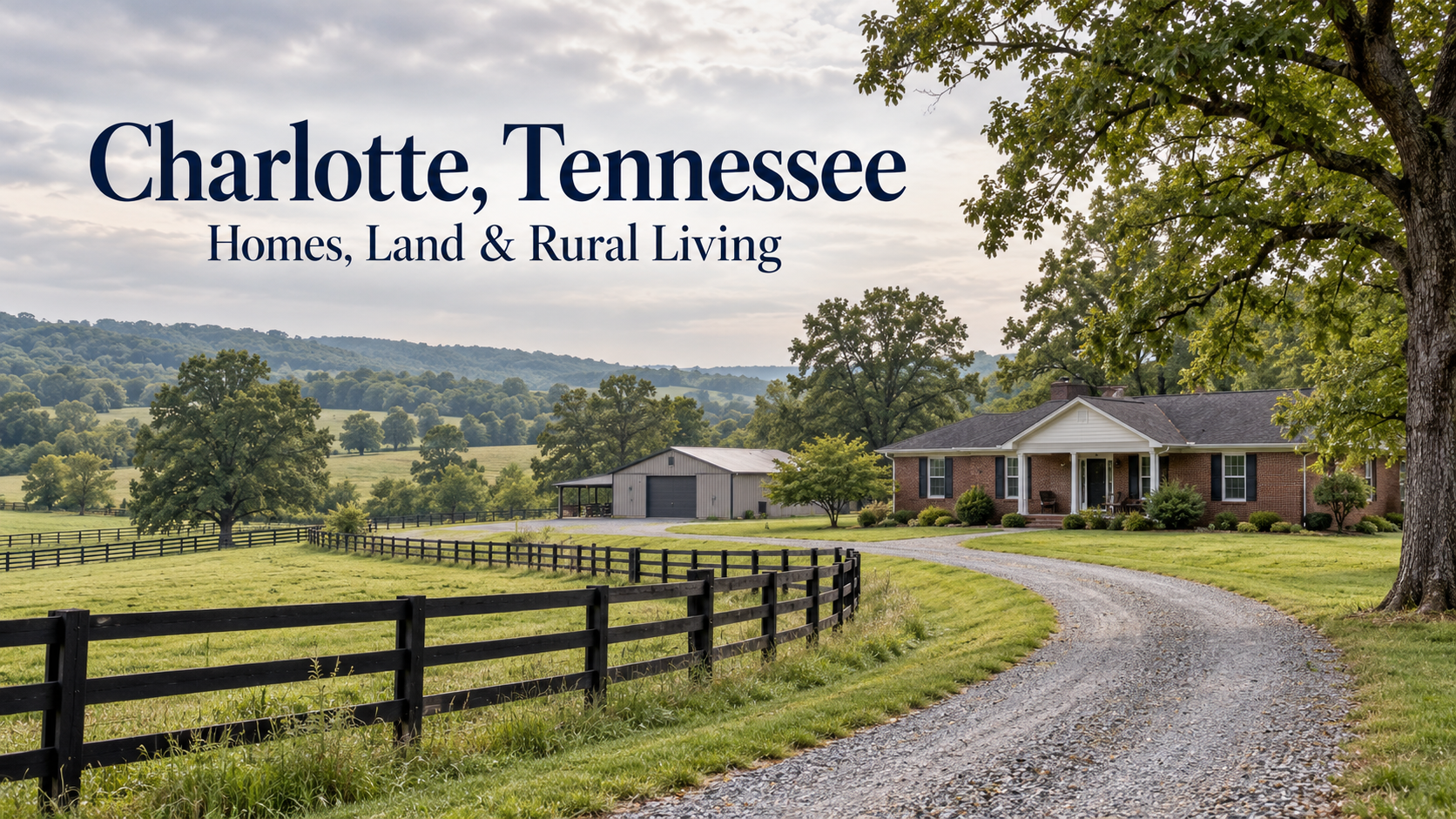
Charlotte TN rural properties should be compared by what the land, house, access, and utilities let you do in everyday life. A town home, a house on a smaller country lot, and a larger tract can all carry a Charlotte address while creating different ownership responsibilities. Start with your intended use of the property, then test the route and budget.
Last updated: October 9, 2026
I’m Harley Pope, a lifelong Middle Tennessee local and Realtor with Pope Real Estate Group at The Baker Brokerage. This guide covers Charlotte, Tennessee, and its surrounding Dickson County search area. It is designed to help you compare town and rural settings without treating every parcel with the same mailing address as the same kind of purchase.
Begin at the house, then widen the map
A productive Charlotte search starts with the life you want at home. Decide whether the land is essential to that life or simply an attractive extra.
If your goal is a manageable house with a modest yard, a larger tract may add work without solving a problem. If you need space for gardening, a permitted shop, or equipment, a small lot with a beautiful interior may never become the property you need. Be precise about the use before making acreage a search filter.
Charlotte is Dickson County’s county seat, as identified by the county government. That fact helps orient the map, but it does not describe every surrounding road or service. Use our Charlotte community page to establish the location, then compare actual properties within the part of the area that suits your destinations.
Write down your essential rooms, maintenance tolerance, recurring travel, and available cash after closing. Together, those details are more useful than a broad request for a house in the country.
Town homes and the roads around Charlotte
A home closer to the town center can offer a different balance of yard size and access than a property farther along a rural road. Neither setting automatically wins on convenience.
For a town or near-town property, look at how the house sits on the lot. Is the usable yard where you want to spend time, or is most of the space in the front? How do guests park? Does the driveway work with the vehicles you own? Mature trees can be a benefit while also requiring inspection and ongoing care.
For a house farther out, measure the trip from the driveway to the first main road as part of every recurring journey. A short distance can feel longer when there are limited passing opportunities, curves, or a difficult turn. Drive the route in the direction and at the time you expect to use it.
The Charlotte homebuying guide provides a broader purchase overview. Here, the goal is to decide which type of setting deserves your attention before you become attached to a particular kitchen or porch.
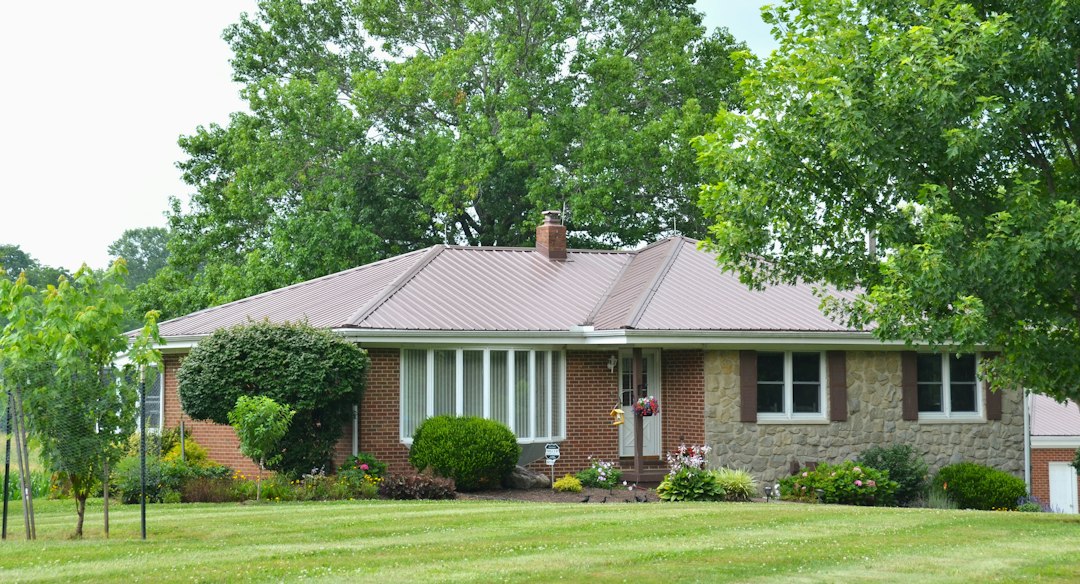
Charlotte TN rural properties: turn acreage into a usable plan
Acreage is a measurement, not a promise of usable space. Compare the parts of the parcel that support your plans.
For example, a buyer who wants a vegetable garden needs suitable sunlight and access to water. A buyer who wants a workshop needs an appropriate location, legal permission, access, and a realistic construction budget. Someone who mainly wants a wooded view may not need open pasture at all.
Sketch where those activities would happen. Include the home, driveway, existing structures, septic area if applicable, drainage features, and known easements. You do not need a professionally designed site plan to recognize that several desired uses may compete for the same small level area.
Then have the important boundaries and restrictions verified through appropriate records and professionals. The Dickson County acreage guide explains the questions that become more important as land becomes a larger part of the purchase.
A useful comparison is cost per useful feature, even if you do not reduce it to a literal formula. Paying for more acres may make sense when they create the privacy or use you want. It is less compelling when the extra land simply increases upkeep.
Read the driveway as part of the property
The driveway is an ownership system, not just the approach shown in a listing photograph. Its surface, grade, drainage, and legal access deserve a deliberate review.
Ask who owns and maintains the road and any shared access. If another parcel has rights across the property, understand where those rights run and how they affect your intended use. Conversely, if your access crosses someone else’s land, have the recorded rights reviewed. A history of friendly informal access is not a substitute for clear documentation.
Consider practical movement. Can a moving truck reach the home? Is there room to turn a trailer around? Where would a delivery vehicle stop without blocking the road? Could you comfortably maintain the drive after a heavy rain?
Ask for estimates when repairs appear necessary. A low purchase price can become less attractive if substantial driveway work is needed immediately. Price that work before committing, and avoid assuming the same contractor or equipment can handle every rural property.
Separate the house inspection from the land review
A sound house does not establish that the entire property is suitable for your plans. Keep the inspection of the building and the review of the parcel connected, but distinct.
Inside the home, focus on structure, roof, heating and cooling, electrical and plumbing systems, and signs of moisture. Outside, examine how the ground slopes toward or away from the home. A freshly finished interior does not answer questions about water movement under the house.
For an older country home, ask about additions and the records supporting them. If a room, porch, or outbuilding has changed use, clarify what was done and whether the relevant approvals are available. An attractive finished space still needs to be evaluated for condition and appropriate use.
Visit the parts of the parcel you intend to use, with permission and appropriate precautions. Listing photographs often favor the prettiest angle. Your purchase includes the less photogenic corners too, including drainage areas, steep sections, and maintenance access.
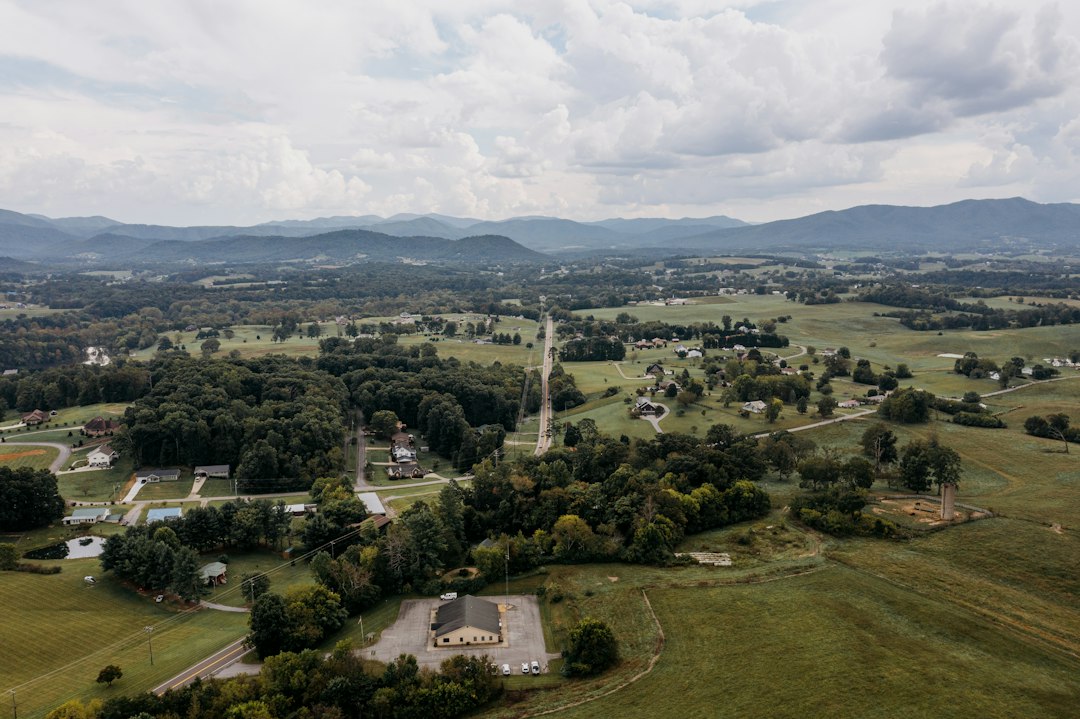
Water, septic, and internet can decide the shortlist
Verify services before you spend time evaluating optional improvements. A house that cannot support your work or planned use may be wrong for you at any attractive price.
For a septic property, request existing records and arrange appropriate evaluation. Tennessee’s septic permitting resources explain the state’s role in installing and changing these systems. Discuss additions or altered use with the appropriate authority rather than assuming that more land guarantees an expansion can be approved.
If the property uses a well, investigate condition, water quality, and the service responsibilities involved. If it uses public water, confirm the account and service arrangement at the specific address. Do not infer either system from the appearance of neighboring properties.
Internet needs the same address-level verification. Confirm the available service, installation timing, and any limits that would affect your work. Test cellular reception in the rooms where you would take calls. A good signal at the end of the driveway does not tell you what happens in the office.
Restrictions and future projects: ask the exact question
Describe the project you want before asking whether the property permits it. Broad questions tend to produce broad answers that are not useful enough for a purchase.
Instead of asking whether a shop is allowed, explain the approximate size, intended use, and proposed location. For animals, equipment, or a home business, describe what you plan to do. Different uses can raise different questions about zoning, setbacks, utilities, access, or recorded restrictions.
Start by confirming jurisdiction. The Dickson County planning office is one source for county questions; a property inside a municipality may require a different contact. Ask which office has authority over the specific parcel.
Keep written answers and supporting documents with your purchase information. If permission for a future use is central to the decision, discuss how that uncertainty should be handled in the offer and investigation period with your Realtor and appropriate professionals.
Make the Charlotte price comparison property-specific
A rural property’s price should be supported by comparable evidence, with the differences explained. A single average for Charlotte is unlikely to describe the exact mix of house, land, and improvements you are considering.
Begin with homes similar in location, usable living area, condition, and land utility. When few close comparisons exist, broaden the search carefully. A similar house with a different bedroom count may be informative, while a much larger home on unrelated acreage may add little.
Separate the contribution of the home, usable land, and outbuildings. A barn that is valuable to one buyer may require repairs or serve no purpose for another. A workshop’s construction cost does not automatically become its resale value.
For ongoing ownership, add insurance, verified taxes, utilities, routine property maintenance, and a reserve for larger work. Include the equipment or hired help you would need. A rural purchase becomes clearer when you compare the annual responsibility alongside the purchase price.
Compare Dickson and White Bluff only when they solve a need
Nearby communities are useful alternatives when they improve a specific part of the decision. Keep the comparison tied to your priorities.
If your regular errands and work are centered on Dickson, compare a similar home there with a Charlotte property using the complete weekly route. Our Charlotte and Dickson comparison helps frame the choice between property space and recurring convenience.
If White Bluff places you better for your destinations, test it as a distinct alternative. The newly prepared White Bluff neighborhoods guide compares town, subdivision, and rural settings using the same practical questions.
The wider Dickson County guide can keep the geography organized. Expanding the search should improve your options, not create an endless list of houses that fail the same basic requirement.
Make the Charlotte service map part of the tour
Charlotte’s Court Square provides a useful orientation point, but county services are not all in one building. The county lists its administration building at Court Square and its justice center on Spring Street. Knowing the destination matters more than simply planning a trip into Charlotte.
Routine waste disposal can also change the rural comparison. The county convenience-center directory identifies Charlotte-area locations on Highway 48 North and Bowker Road. Confirm the current rules and hours, along with any private collection options for the address. Add the stop to your scouting route if it would become a recurring task. A property’s practical location includes services like these, not only the drive to a restaurant or workplace.
A scouting day built around ordinary ownership
Use a Charlotte visit to test the whole property and the trips connected to it. Allow time beyond the interior showing.
Start with your work route, then visit the house and the outdoor areas that matter to you. Run an ordinary errand from the property. Return when the lighting or traffic is different if possible. Record what you observed instead of relying on a general feeling that the setting was peaceful.
Before offering, make three lists: verified facts, costs that need estimates, and uses that require confirmation. For a larger tract, those last two lists may matter more than another round of cosmetic comparisons. A careful search can still move promptly when the right property appears because the decision criteria are already clear.
Frequently Asked Questions
How much acreage do I need around Charlotte?
Start with the use rather than a target number. Gardening, equipment storage, a workshop, or a wooded buffer each requires different space and conditions. A smaller usable parcel can fit better than a larger one with difficult access or terrain.
Is an existing outbuilding automatically usable as a workshop?
No. Review its condition, electrical service, access, intended use, and applicable permissions. A building that works for storage may not be appropriate for another activity without changes. Include the cost of those changes in your comparison.
Should a missing septic record end the search?
It should trigger further investigation. Online records may be incomplete, and the appropriate office may have additional information. Ask what documentation and evaluation are available, then decide with your professionals whether the uncertainty can be resolved within your purchase timeline.
Can I rely on the parcel outline shown on a listing map?
Use it for orientation, not as a substitute for a survey or legal review. The precise boundaries, access rights, easements, and usable areas matter when land is central to the purchase. Resolve important discrepancies before relying on that outline for a project.
What would make a town home preferable to acreage?
A town home may fit better when you value a simpler maintenance routine, a smaller outdoor area, or a location closer to regular stops. Acreage makes sense when its benefits are important enough to justify the work, cost, and location tradeoffs.
About Harley Pope
Harley Pope is a Realtor with Pope Real Estate Group at The Baker Brokerage and a lifelong Middle Tennessee local. He works with buyers and sellers in Dickson County, Nashville, Maury County, and surrounding communities. His approach to rural properties connects the house, land, ownership costs, and everyday routine so clients understand the purchase beyond the acreage number.
Considering a Charlotte home or rural property? Contact Harley and Victoria Pope with Pope Real Estate Group at The Baker Brokerage. Tell us what you want the land to do, where you travel regularly, and your budget so we can narrow the search.