Ashland City Communities: Comparing In-Town Homes, Acreage and River-Area Properties
Ashland City communities and surrounding properties can be compared through three different searches: an in-town home with practical access to errands, a property with usable acreage, or a river-area purchase with additional water-related questions. Choose the routine and intended land use first. Then verify the specific home’s jurisdiction, utilities, access, condition, flood information, and ownership costs before treating its setting as a purchase advantage.
Last updated: October 12, 2026
I’m Harley Pope, a lifelong Middle Tennessee local and Realtor with Pope Group at The Baker Brokerage. This guide covers Ashland City, Tennessee, and relevant nearby property patterns. It does not rank neighborhoods, label all river-area homes alike, or substitute a map for professional flood, insurance, title, and condition review.
Ashland City communities: decide which property search you are making
Begin by distinguishing the goal. An in-town house, an acreage property, and a home marketed around river access may all appear in an Ashland City search while solving different needs and creating different responsibilities.
Use the Ashland City community guide and Cheatham County overview for orientation. Then identify the exact parcel and municipal boundary rather than assuming the mailing address establishes the responsible jurisdiction.
Write down the work destination, recurring errands, comfortable ownership budget, essential layout, and intended outdoor use. If a workshop, additional building, boating routine, or large garden matters, state that specifically. The feasibility question changes with the planned activity.
Keep the Ashland City buyer’s guide alongside this comparison. It helps frame transaction questions while this article organizes the differences among housing and land patterns.
In-town homes: value the practical connections
For an in-town home, compare how the location supports ordinary trips. Map the store, appointment, work route, and recreation destination you will actually use. A downtown label does not make every property equally connected to those places.
Walk or drive the exact routes. Note sidewalks, crossings, parking, grades, and the connection from driveway to the road. If walking is important, test the trip rather than assuming it from proximity on a map.
Compare established detached homes with any attached housing that fits the brief. Examine stairs, parking, storage, outdoor space, and maintenance responsibilities. A compact property can be practical without offering the same land-use possibilities as a detached house.
For older homes, ask for improvement records and inspect underlying systems. An updated room does not establish the condition of roof, plumbing, electrical, foundation, or drainage. Price the essential work and the ownership arrangement together.
Parks and river destinations: compare access with property rights
Ashland City’s Riverbluff Park and Cumberland River Bicentennial Trail provide official starting points for evaluating recreation that may matter to your routine. Check current access and conditions when planning a visit.
A home near a public river destination does not automatically include private water access, a dock, launch rights, or control of shoreline. Separate proximity to an activity from rights attached to the property. Verify any advertised access through the appropriate documents and authorities.
If recreation is a major reason to move, test the whole sequence from home to the activity and back. Include equipment storage, parking, handling, and the season in which you expect to use it. The routine should work without relying on an assumed right or unfinished improvement.
This distinction can make an in-town property worth considering even when you want river recreation. You may prefer using public facilities while owning a home with a different set of maintenance and water-related responsibilities.
River-area properties: investigate exposure without making blanket assumptions
Evaluate the exact parcel and building rather than deciding from a water view or neighborhood description. Proximity to the Cumberland River is not, by itself, a complete explanation of flood exposure, access conditions, insurance needs, or development restrictions.
Start with current information through the FEMA Flood Map Service Center. Ask the responsible local office, lender, insurer, and suitable professionals about the questions that apply to the home. A mapped designation is an important input, not a guarantee about every possible water event.
Review available elevation information, prior water events, drainage, building position, and the access route. An elevated home may still require investigation of roads, lower improvements, and utilities. Ask what documentation exists instead of filling gaps with assumptions.
Obtain an address-specific insurance discussion early enough to inform the purchase. Clarify coverage, exclusions, and requirements with the insurer. Compare the property’s setting and price with the complete responsibilities you would accept as the owner.
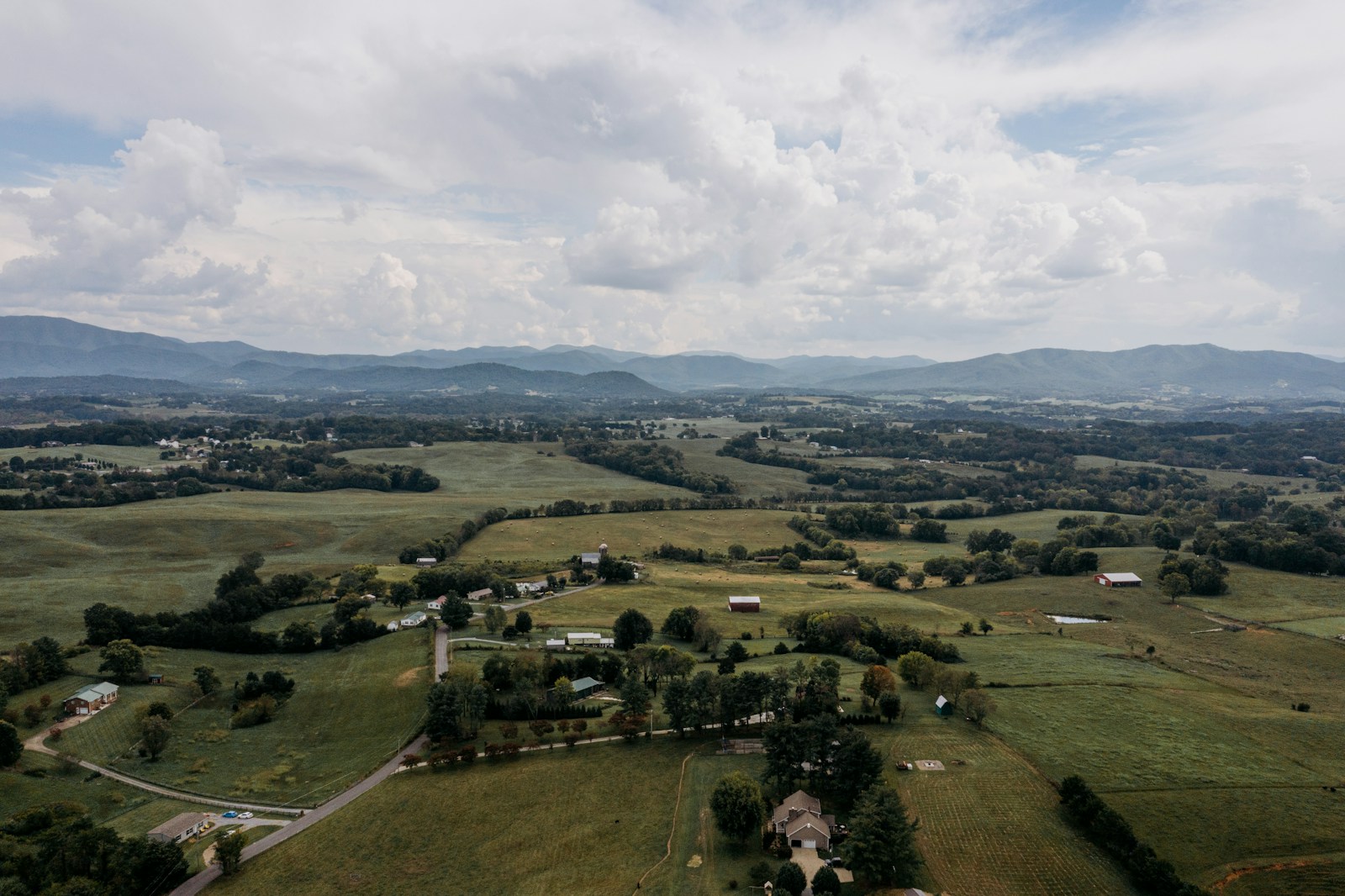
Acreage: separate the useful land from the total area
For a property with more land, identify what each portion can do. Level yard, pasture, wooded slope, drainage area, and steep terrain provide different kinds of usefulness. The listed acreage should be the beginning of the evaluation.
Walk the intended areas where permitted and review boundaries through appropriate records and a survey when needed. Confirm legal access, road responsibility, easements, and recorded restrictions with the professionals handling the purchase. An existing path or driveway should not settle the legal question by appearance alone.
If you want a workshop or detached building, investigate setbacks, wastewater limitations, utilities, driveway needs, grading, and permissions. Obtain relevant cost and site guidance before making that project the reason to buy.
Compare the required maintenance with the way you want to spend weekends. More land can be an excellent fit when you want to use it. It can also create equipment, tree, fence, erosion, or driveway obligations that should be understood before the purchase.
Utilities and internet require address-level confirmation
Verify who provides each service and what is actually available at the home. A nearby line, a general coverage map, or an Ashland City mailing address does not establish connection capacity, installation timing, or the applicable charges.
The city’s water and wastewater resources offer a starting point for municipal service questions. Confirm the provider, connection arrangements, responsibility, and relevant records for the exact property rather than applying the same assumption across in-town and rural homes.
Where septic is used, review permits, approved capacity, condition, and maintenance history. Discuss an additional bedroom, structure, or other planned change with the responsible professionals and offices. An existing house does not prove that the property can support an expansion.
For remote work, obtain internet plans and installation expectations directly from the provider. Evaluate the office space and a realistic backup arrangement if the job requires one. The infrastructure should be confirmed before a rural property becomes the finalist.
Homes with views and slopes need a practical access review
An elevated setting or hillside view can be appealing, but examine the route and site as carefully as the view. Driveway grade, turning space, drainage, retaining features, and access to the main entrance affect how the property functions.
Consider deliveries, visitors, moving equipment, and ordinary parking. If you need a trailer, larger vehicle, or workshop access, test the dimensions and arrangement. A photograph from the best angle may not reveal a difficult turn or limited level space.
Ask about maintenance records for retaining features and drainage work. Have relevant concerns evaluated by qualified professionals. A general home inspection may identify the need for further review rather than settle every site condition.
Separate a view you enjoy from a view you assume will remain unchanged. Investigate neighboring land through current records when material, but do not treat undeveloped land as a promise that nothing will be built there.
Routes to Nashville and nearby communities
Test the connection to your actual destination. A home that works for local Cheatham County errands may create a different routine for someone traveling into Nashville several days each week.
Drive the expected departure and return routes at realistic hours. Include the local road segment, parking, and routine stops. Compare a candidate with another practical location rather than relying on one broadly advertised commute time for Ashland City.
Pleasant View, Kingston Springs, and White Bluff can be useful separate comparisons when their routes or property choices solve a need. Their locations are different, so give each a specific reason to remain on the map.
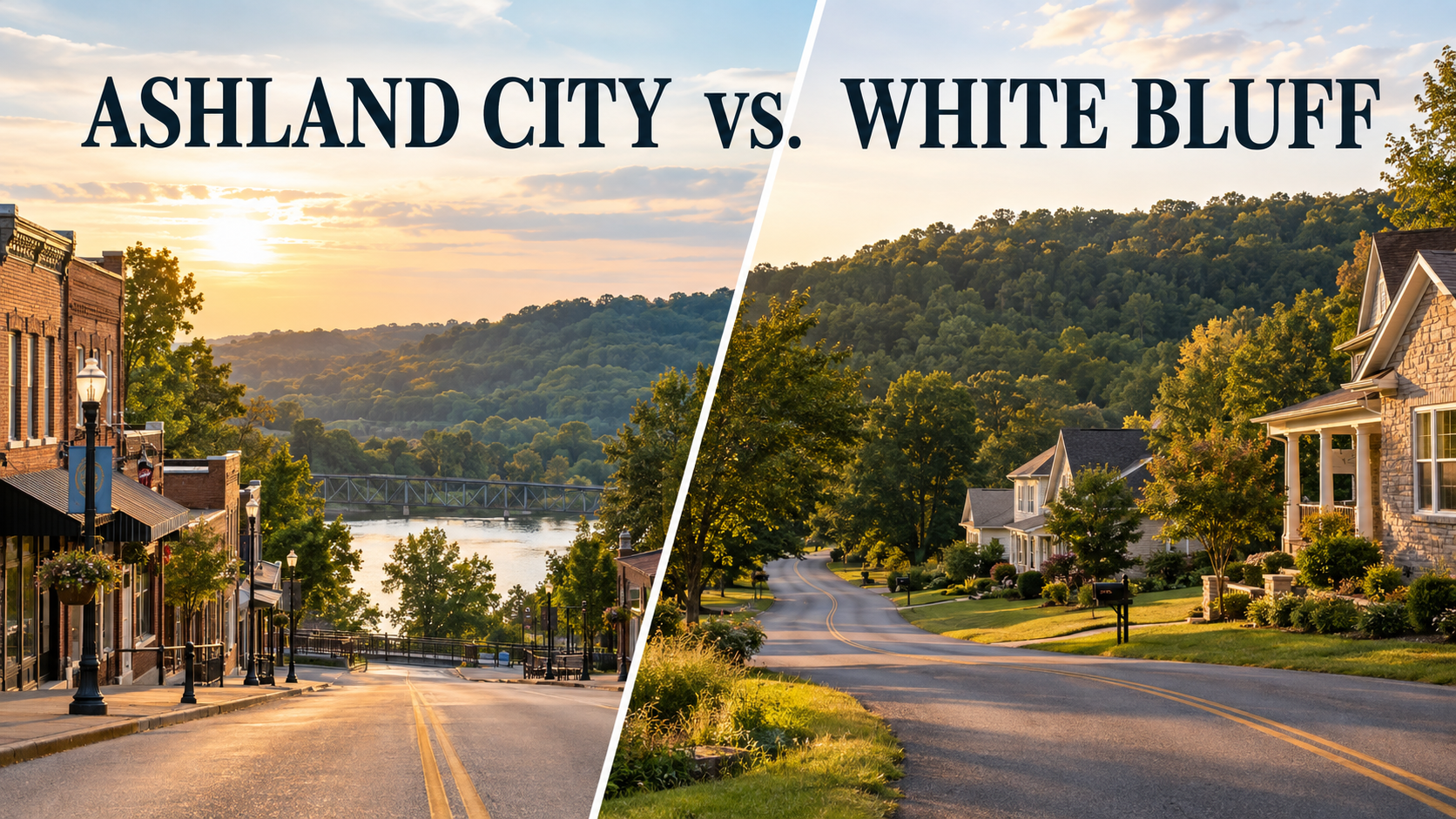
The Ashland City and White Bluff comparison offers additional context. Use the property and routine details to make the choice, rather than treating descriptive language in an article title as evidence about an entire area.
Price the property pattern and the complete ownership cost
This guide does not publish fixed price ranges for in-town, acreage, or river-area homes. Use recent relevant sales and current competing properties that match condition, location, land usefulness, improvements, and material obligations.
For acreage, distinguish usable land and documented improvements from gross size. For river-area properties, include water-related findings and insurance information. For an established home, compare systems and repair needs. Those differences can materially change what a reasonable purchase looks like.
Put current financing estimates, verified taxes, insurance, utilities, association charges if applicable, and maintenance on one worksheet. Add essential repairs and desired projects separately. The first-year expense can differ even when two asking prices are similar.
If you will sell another property, use the Ashland City selling guide to help frame preparation and timing. Coordinate proceeds and possession with the professionals involved instead of assuming a purchase can be funded on an unconfirmed date.
Compare new construction with the actual finished alternative
When considering a new home, verify what the written price includes and how the lot functions. Compare structural options, finishes, landscaping, drainage, access, association responsibilities, and any remaining work with an established home that meets the same requirements.
Review the completion schedule, inspection access, warranty terms, deposit rules, and possession arrangements. A long-distance move or a linked sale needs a plan for uncertainty rather than reliance on a model home’s presentation.
For future phases or surrounding development, identify existing conditions, proposals, approvals, and unfinished work separately. A planned amenity or road connection should not be treated as complete. Obtain current information from the responsible planning office when it matters to the decision.
New construction can simplify some parts of ownership while leaving others, such as outdoor work or infrastructure questions, unresolved. The comparison should be based on the specific purchase you can complete and comfortably maintain.
The Tuesday Test and a useful property checklist
Tour one or two realistic examples from the property patterns that fit your brief. Compare an in-town home with an acreage or river-area option only if you would seriously buy both after understanding their differences.
For The Tuesday Test, follow the ordinary sequence: leave for work or an appointment, make an errand, return, park, and use the home. Add the land activity or river trip that motivated the search. Include access and equipment handling rather than only the pleasant part of the experience.
After each visit, record the main benefit, inherited responsibility, essential cost, and unresolved question. Organize documents around jurisdiction, access, utilities, condition, flood information, title, restrictions, and intended use. That makes the follow-up discussion more concrete.
Finish with a small set of understood options. The right property is the one whose location, space, risks, and obligations fit your plans, with enough verified information to support the offer and inspection decisions.
Frequently Asked Questions
Does a river view mean the property has private river access?
No. A view and a legal access right are different facts. Confirm boundaries, recorded rights, permissions, and any dock or shoreline arrangements with the responsible professionals and authorities before relying on them in the purchase.
Can I decide flood exposure from the home’s elevation?
Elevation is one input, but the exact parcel, access route, current maps, prior events, drainage, and insurance questions also need review. Use suitable professional guidance. Neither a view nor a single observation settles the full water-related assessment.
What is the most important acreage question?
Ask whether the land supports the use you actually want. Check grade, access, utilities, wastewater, restrictions, and improvement feasibility. Total acreage alone does not establish room for a particular building or activity.
Should I verify utilities before making an offer?
Resolve material service questions early enough to guide the purchase. Obtain address-specific information for water, wastewater, electricity, and internet, along with relevant records. Nearby service or a mailing address does not establish availability at the home.
Can an in-town home suit someone who wants river recreation?
Yes, when the home and connection to usable public facilities fit the routine. Compare the whole trip and equipment needs. Owning near recreation does not require assuming private access or taking on a riverfront property’s responsibilities.
About Harley Pope
Harley Pope is a lifelong Middle Tennessee local and Realtor with Pope Group at The Baker Brokerage. He helps buyers and sellers compare homes, usable land, condition, ownership costs, and location across Cheatham County, Dickson County, Maury County, Nashville, and surrounding communities. His approach keeps the client’s intended use and daily routine connected to the property facts and professional reviews needed before a decision.
Comparing Ashland City properties? Contact Harley and Victoria Pope at Pope Group at The Baker Brokerage to build a focused search for an in-town home, usable acreage, or a carefully evaluated river-area option.