Columbia vs. Franklin: Small-Town Value or Upscale Convenience?
Columbia vs Franklin TN: Columbia generally offers the stronger value case, while Franklin offers the stronger convenience and higher-end amenity case. A buyer choosing between them is deciding whether a substantially lower citywide price point and a more independent small-city identity outweigh the additional northbound distance to Cool Springs, Brentwood and Nashville.
Last updated: September 14, 2026
Scope: This guide compares Columbia and Franklin, Tennessee, using August 2026 citywide housing data and practical location factors.
Columbia or Franklin: what is the short answer?
Start in Columbia if budget flexibility, more interior space or access to rural-edge properties matters most. Start in Franklin if an I-65-oriented routine, Cool Springs access, established amenities and a larger concentration of higher-end housing are worth paying more for.
How do prices compare in 2026?
| City | Median sale price | Median price per square foot | Median days on market |
|---|---|---|---|
| Columbia | $368,006 | $187 | 78 |
| Franklin | $862,929 | $329 | 49 |
The figures cover the three months ending August 2026 and come from Redfin’s Columbia data and Redfin’s Franklin data. They are all-home-type medians, not matched-property valuations.
The $495,000 citywide median gap and lower price per square foot make Columbia the clearer value starting point. The comparison still changes when you match lot, condition, age, school assignment, commute and neighborhood.
Where can buyers get more space?
Columbia generally gives buyers more purchasing flexibility for interior square footage and rural-edge searches. Its housing mix includes historic homes, established subdivisions, newer communities and properties outside the denser core.
Franklin also has acreage and large homes, but many compete in a much higher price tier. Buyers should compare usable land, utilities, septic or sewer, restrictions and renovation needs rather than assuming acreage is interchangeable.
Which city is more convenient?
Franklin is better positioned for regular travel to Cool Springs, Brentwood and Nashville. Columbia sits farther south and works best when the household’s employment is local, hybrid, south-corridor based or flexible enough to justify the drive.
Do not rely on a quiet-hour map estimate. Drive from the actual property to the actual workplace on a Tuesday morning and repeat the return trip.
How does the lifestyle differ?
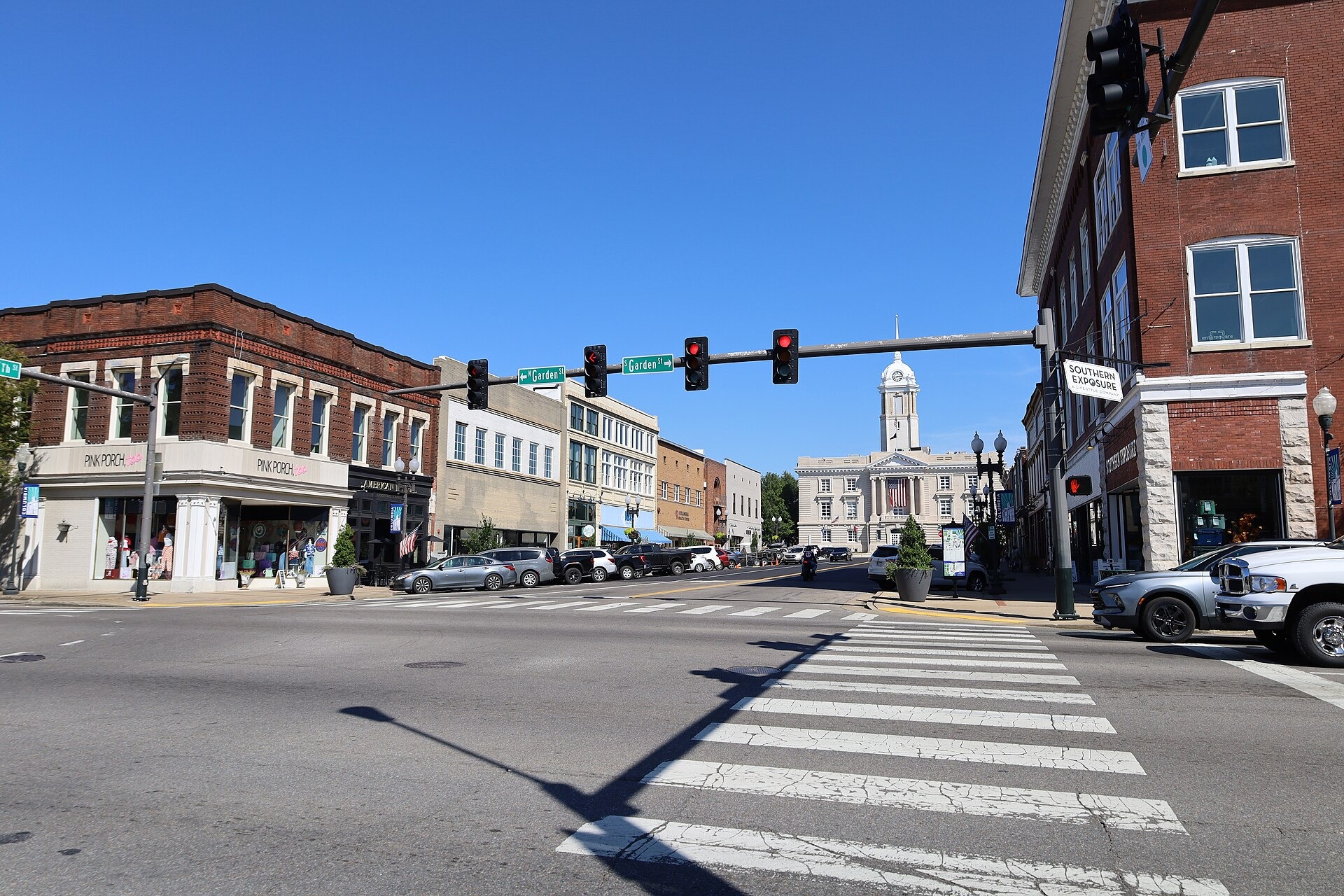
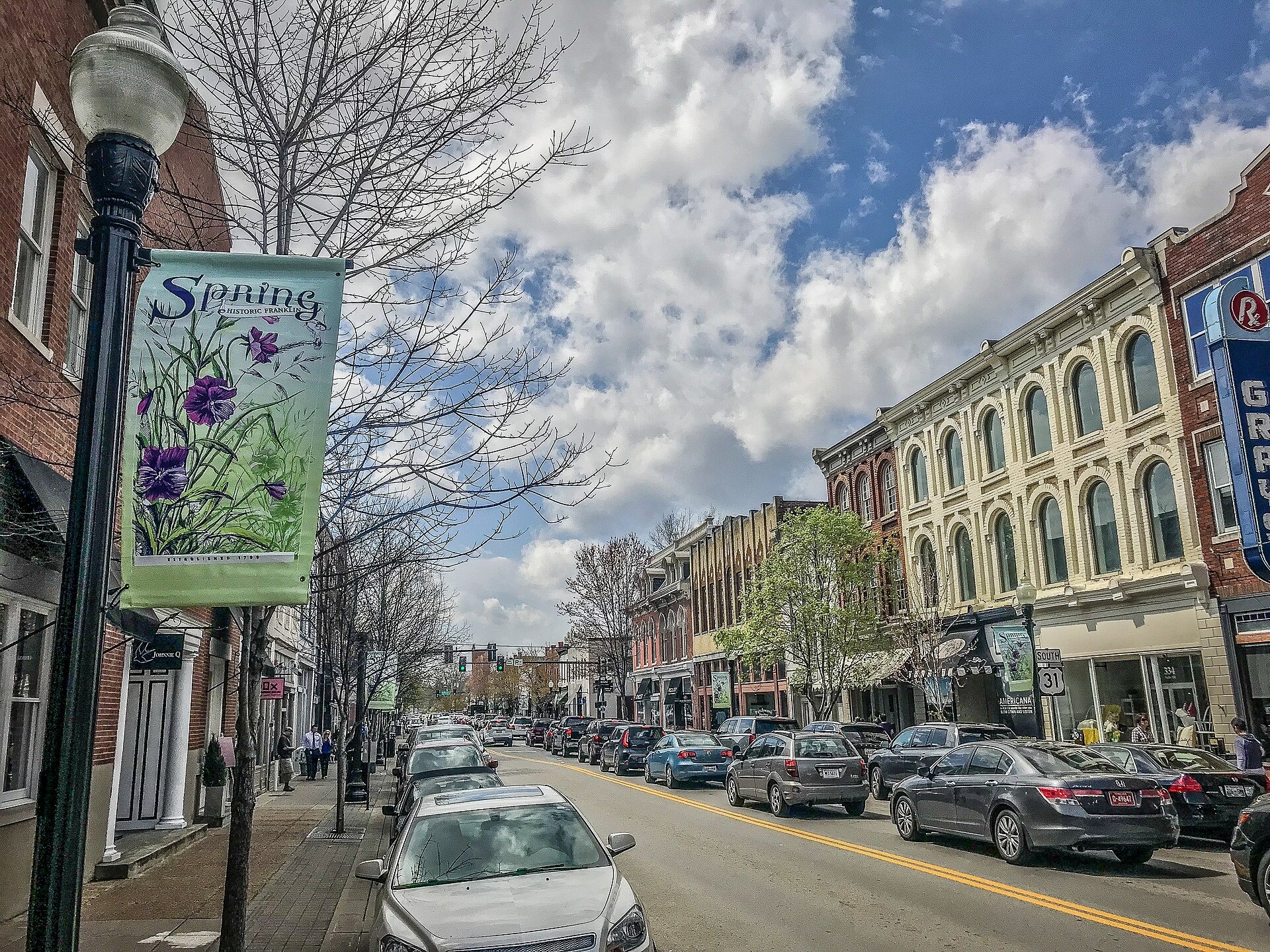
Columbia has a recognizable historic square, Duck River connection and an identity that is not simply an extension of Nashville. Franklin has a polished historic Main Street, a larger upscale commercial base and more continuous suburban development toward Cool Springs.
Neither city is one uniform experience. A newer Columbia subdivision can feel suburban, while an older Franklin property can feel private and rural. The five-minute radius around the home matters more than the broad label.
Give both cities the Tuesday Test
- Set the same all-in payment ceiling for both cities.
- Compare homes meeting the same non-negotiables.
- Drive work, groceries and recurring activities.
- Verify taxes, utilities, restrictions and future development.
- Ask whether Columbia’s added value or Franklin’s convenience improves ordinary life more.
Is Columbia cheaper than Franklin?
Yes by the August 2026 citywide median and price-per-square-foot data. Individual homes can overlap.
Does Columbia offer more house for the money?
The citywide data strongly suggests it often does. Condition, lot and location still require a matched comparison.
Which is closer to Nashville?
Franklin. Actual commute time depends on the address, destination, route and traffic.
Which has more acreage?
Columbia gives buyers a broader lower-price starting point for rural-edge searches, but acreage availability changes and every parcel needs separate review.
Which has more newer homes?
Both have new construction. Columbia combines it with older in-town and rural-edge options, while Franklin’s new construction often begins at a higher price.
What other comparisons help?
Buyers can review Franklin versus Brentwood and the broader guide to Nashville, Brentwood and Franklin.
Questions to ask before choosing between Columbia and Franklin
- Which location better protects the drives and routines I cannot avoid?
- Am I paying for amenities or location that I will genuinely use?
- Does the home provide the space, privacy, or convenience I am moving for?
- What will ownership look like after closing, including insurance, taxes, utilities, HOA expectations, and upkeep?
- Which option still feels right when I imagine an ordinary weekday instead of a Saturday showing?
A better way to make the final call
If you want help comparing Columbia, Franklin, or other Middle Tennessee options, explore communities and local market context, start a home-buying plan, or talk through the decision with Harley.
Questions to answer before you move forward
- Which option best supports the routines I cannot avoid?
- What part of this home will improve my everyday life?
- Which compromise am I comfortable making, and which one would bother me later?
- Do the ongoing costs and first-year projects fit the plan?
- Have I compared this choice to the best realistic alternative, not just to an idea?
Columbia vs Franklin TN: the practical difference
The choice between Columbia and Franklin should begin with a weekly routine, not a one-line verdict about value or convenience. Columbia is distinguished by a historic downtown, a broader range of older housing and the identity of a separate regional center. Franklin is distinguished by Cool Springs employment access, a highly active historic core and closer integration with Williamson County’s Nashville-facing economy. The gap is not simply price: Columbia and Franklin support different daily geographies, municipal contexts and expectations for proximity. A useful comparison keeps the household’s actual destinations, budget and property responsibilities visible from the beginning.
Start with the route you will repeat
From Columbia, buyers need to test US 31, Highway 7 and I-65 approaches from Maury County. From Franklin, the relevant network includes I-65, Mack Hatcher and local Williamson County routes. Drive the primary route during the hour it will normally be used, then test the return trip. Include school pickup, childcare, medical visits and grocery runs. A community can be attractive on a quiet Saturday and still create a frustrating Monday-to-Friday pattern.
Compare lifestyle without relying on rankings
Spend an ordinary hour in both Columbia and Franklin. Buy groceries, try the work route, visit the nearest park or downtown area and note how spontaneous errands would feel. Community fit includes how often you will leave town for dining, medical care, youth activities or entertainment. A quieter setting may be the point, but the tradeoff should be chosen consciously.
About Harley Pope
Ready to compare Columbia and Franklin in person? Contact Harley Pope to plan a focused tour.
Read the map from Columbia’s side
Columbia offers a historic downtown, a broader range of older housing and the identity of a separate regional center. That description should be tested at the address level through US 31, Highway 7 and I-65 approaches from Maury County. Note the first ten minutes of every routine, because local-road access often determines whether the broader commute feels workable. Visit a representative older home, a typical subdivision home and a rural-edge option when available; the contrast explains the community better than its most polished listing.
Read the map from Franklin’s side
Franklin is better understood through Cool Springs employment access, a highly active historic core and closer integration with Williamson County’s Nashville-facing economy. Route testing should include I-65, Mack Hatcher and local Williamson County routes. Compare the same weekday destinations used for Columbia and write down the difference rather than relying on memory. The important result may be commute time, but it may also be road comfort, grocery access, medical access or how frequently the household would need to leave town.
What the Maury and Williamson counties context changes
The gap is not simply price: Columbia and Franklin support different daily geographies, municipal contexts and expectations for proximity. Pull the tax record, utility information, school assignment and available planning information for each finalist. Treat a mailing address as a label, not proof of jurisdiction or service. Where growth is visible, ask what is approved nearby and how road capacity or construction could affect the property. Where the setting is rural, investigate internet, private systems, easements and emergency access.
A fair final comparison
Give Columbia and Franklin the same test: two representative homes, one ordinary errand loop, one peak-period route and one total-cost worksheet. State the strongest reason to choose each place before stating a preference. This guards against confirmation bias and produces a decision that can survive the next new listing. The winner should be the community that repeatedly supports the household’s priorities, not the one with the single most exciting house.
Keep the house from overpowering the location
For Columbia and Franklin, separate reversible features from fixed ones. Paint, fixtures and some finishes can change. Road position, lot shape, commute geography and many utility conditions cannot. Price the reversible work, investigate the fixed conditions and decide which compromises remain acceptable. That order helps a buyer act quickly without turning speed into guesswork.
Plan the next step
After the first comparison, narrow the unresolved issue to one sentence. It might be whether Columbia provides enough convenience or whether Franklin provides enough property for the drive. Ask the next tour or document review to answer that issue. Focused research is faster than restarting a broad county-wide search whenever a new listing appears.
Columbia versus Franklin for changing work patterns
A hybrid schedule can make both places look equally workable until meeting days, school days and travel days are placed on the same calendar. From Columbia, test the earliest required arrival and the latest typical return. Repeat from Franklin. If remote work is important, verify wired internet at the property, cellular backup and whether the floor plan offers an acoustically separated room rather than merely an extra bedroom.
Land and outdoor use in the Columbia–Franklin search
Buyers often describe the goal as more space, but space should be assigned a purpose. For every Columbia or Franklin candidate, mark the level play area, drainage path, steep or wooded portion, septic area when applicable and the route for equipment or deliveries. A smaller usable yard may outperform a larger difficult parcel. Estimate mowing, tree and driveway work before treating acreage as free value.
Resale flexibility in Maury and Williamson counties
Resale is not a prediction of future price. It is an evaluation of how many common buyer needs the property can serve. In both Columbia and Franklin, consider bedroom function, parking, internet, road access, maintenance burden and proximity to recurring destinations. An unusual property may be exactly right, but its special features and narrower audience should be understood before the offer rather than discovered when circumstances change.
Use documents to test the tour impression
After visiting Columbia and Franklin, return to primary records. Review the tax parcel, disclosures, available permits, HOA material, utility information and the title and survey process recommended for the transaction. When the lot or improvements raise a question, identify the professional qualified to answer it. Good local context helps buyers ask better questions; it does not replace inspection, legal, tax or engineering expertise.
The decision-day rule
Before a competitive listing appears, decide how Columbia and Franklin rank when homes are otherwise comparable. Also decide which property defect, route problem or cost would reverse that ranking. This pre-work makes speed safer because the household already knows what evidence matters. When a home does not fit, rejecting it quickly is progress rather than a lost opportunity.
A final Columbia and Franklin reality check
Ask whether the preferred community would still win if the favorite current listing disappeared. Then ask whether the preferred house would still win if its commute took fifteen minutes longer than the best test. Those two questions separate durable location fit from temporary listing excitement. Record the answer, the supporting facts and the unresolved risk before deciding.
Continue the Columbia and Franklin research
Review the Williamson County area page, the Franklin living guide, the buyer guide, and the inspection checklist before narrowing specific homes.