
Selling a Home in Brentwood, TN: Luxury Positioning, Presentation and Marketing
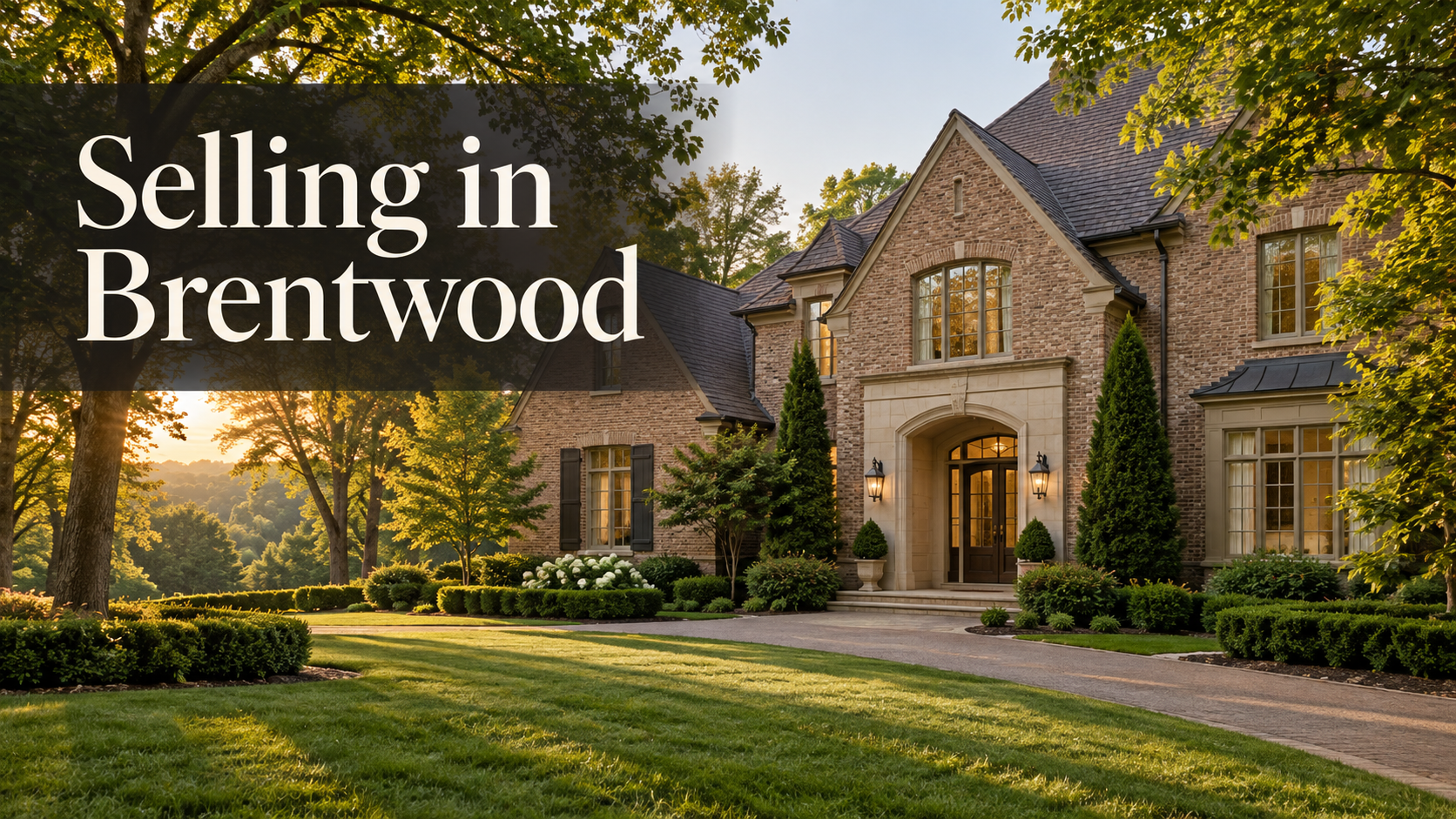
Selling a home in Brentwood, TN requires more than impressive photographs and a luxury label. Buyers need a clear understanding of the property’s location, usable lot, layout, condition and carrying costs. Price from relevant completed transactions, document the features that distinguish the house, and market it accurately to people evaluating real alternatives at a similar budget.
Last updated: September 30, 2026.
Local perspective: I’m Harley Pope, a lifelong Middle Tennessee local and a Realtor with Pope Real Estate Group at The Baker Brokerage. Victoria and I help sellers connect presentation and negotiation to a supported price and a workable next move.
Selling a home in Brentwood, TN starts with the parcel
Confirm the property records before deciding what the listing should promise. A postal address does not establish every municipal, county, zoning or service detail. Verify the lot boundaries, applicable jurisdiction, association documents and any recorded restrictions. Precise information is particularly valuable when outdoor improvements are a major part of the asking price.
The Brentwood community page and Williamson County overview provide useful orientation. Your individual property still needs its own profile. Describe the house, garage, outdoor areas and systems as they exist today, separating verified improvements from a future owner’s possible plans.
If a pool, guest structure or addition is central to the property’s appeal, gather relevant plans and approvals. Brentwood’s residential documents and zoning guidance are starting points for city requirements. Confirm the actual project with the appropriate staff and professionals.
Define value through utility rather than a label
A luxury description should point to specific, verified qualities. Construction materials, room proportions, a well-designed kitchen, useful outdoor living and documented system upgrades can help a buyer understand a property. A long list of expensive finishes does not prove that the house supports ordinary daily routines.
Walk through the home as a potential owner would. Where do groceries arrive? Does a work area offer privacy? Is the primary bedroom location convenient for the intended use? Can the garage accommodate its described capacity? A spacious house can still make daily movement awkward, and buyers notice those compromises.
Avoid claiming that a feature commands a fixed premium without comparable support. A pool can be a benefit for one purchaser and an added obligation for another. The right marketing makes the feature understandable, including condition and maintenance, without declaring it universally valuable.
Establish the sale’s financial and timing priorities
Set your desired proceeds, timing and capacity to carry the house if the sale takes longer than hoped. Larger properties can involve substantial ongoing expenses, but those costs must be calculated from your actual situation. Put taxes, insurance, utilities, maintenance and any replacement-home overlap into the planning conversation.
Request an estimated net using your mortgage and other payoffs, agreed expenses and plausible concessions. Identify unknown items instead of hiding them in a single percentage. The price that makes the arithmetic work for you may differ from what comparable evidence supports, and that gap deserves a direct discussion.
If your replacement search includes Franklin or Nashville, evaluate purchase financing and timing before choosing a launch date. A strong offer can still require inspection, appraisal or funding steps. Reserve flexibility rather than treating contract acceptance as completed proceeds.
Build several comparable groups when necessary
For a distinctive home, one narrow subdivision search may not provide enough evidence. Begin with the closest matches, then consider additional transactions with similar construction, usable size, lot quality and condition. Explain why each group is relevant and where location or age creates a limitation.
Review the interiors and outdoor improvements in detail. Two properties with similar square footage can differ substantially in renovation quality, ceiling heights, basement utility, garage configuration or site work. Price per square foot may help orient the discussion, but it cannot carry the entire valuation.
Inspect current alternatives as well as closed sales. A well-presented active listing may compete for attention even if its price is ambitious. An expired listing may reveal a positioning problem without proving its owner was wrong about every feature. Keep transaction evidence separate from asking-price aspirations.
Account for condition at the level buyers expect
Preparation begins with systems and maintenance, not decorative staging. Review roof, drainage, heating and cooling, electrical components, plumbing and specialty equipment with qualified providers as needed. Buyers considering a substantial purchase may investigate multiple systems in greater depth, particularly when a home has complex amenities.
Gather service records for pools, irrigation, generators, elevators or other equipment actually present. Verify any transferable warranty rather than advertising coverage from memory. If a specialist identifies work, compare completing it before launch with offering transparent information and a supported asking position.
Avoid extensive remodeling simply to imitate the newest competing home. A project can create delays, cost overruns and a mismatch with buyer taste. Consider whether the existing property can be presented as a coherent, well-maintained home. A focused update may be more rational than replacing every finish.
Make the lot’s real capabilities visible
A buyer needs to understand usable outdoor space, grade, access, drainage, easements and maintenance responsibilities. Lot area alone does not tell that story. Show meaningful views and relationships between the house, terrace, lawn and structures without enlarging or altering them in photographs.
Do not promise that an additional dwelling, pool or detached garage can be built merely because room appears available. Municipal requirements, association restrictions, utility locations and site conditions can all matter. Obtain address-specific guidance before using a possible project as a selling feature.
A survey or documented site plan can answer questions that aerial photographs cannot. Explain whether the available document is current and what remains unverified. Buyers should be encouraged to obtain their own professional review when a particular future use drives the purchase.
Use presentation to clarify, not distract
Declutter enough to reveal scale and room connections. Use furniture that helps the buyer understand a space without suggesting a configuration the house cannot comfortably accommodate. Clean sight lines, consistent lighting and maintained landscaping often do more than adding elaborate accessories.
Photographs should show the property in a logical sequence. Begin with the strongest authentic view, then communicate the main living spaces, primary suite, secondary rooms, garage and outdoors. A cinematic video can support the story, but it should not make the home difficult to evaluate behind rapid cuts.
If virtual staging is used, identify it appropriately and retain a clear view of actual condition. Avoid editing that removes nearby structures, changes permanent finishes or conceals a material defect. Buyers comparing substantial purchases need accurate information more than a more dramatic image.
Write property copy with concrete evidence
Explain materials, layout, included equipment and documented improvements. Replace unsupported claims about being the best or offering guaranteed returns with facts a buyer can inspect. Describe location through verified access and nearby destinations without promising a fixed commute or making demographic assumptions.
The Brentwood buyer guide can help readers consider ownership and location. Your listing should answer the questions particular to this home, such as which rooms are on each level, how outdoor areas are accessed and what maintenance records are available.
Ensure brokerage identification and other required advertising details remain visible across the entire package. A property description should invite investigation rather than imply certainty about matters that need underwriting, inspections or government approval. Clarity builds a better starting point for negotiation.
Select a price strategy with an explicit tradeoff
Ask for a supported asking range and the consequences of a higher, central or more aggressive position. The evidence may justify a premium for a genuinely differentiated property. It may also show that buyers have convincing alternatives at a lower price. Either finding should be explained directly.
A higher initial test requires patience and an agreed review process. A price closer to competing value can broaden consideration, although it cannot guarantee speed. An aggressive asking position may attract interest without creating the multiple-offer result some sellers hope for. Treat all three as strategies rather than promises.
Consider relevant search bands when setting the number. A meaningful repositioning can change the pool of buyers who see the house, while a small adjustment may leave the same objections untouched. Decide how long you are willing to test and which measures will prompt a response.
Design access around a serious evaluation
Large homes and complicated properties take time to see properly. Give buyers enough access to understand rooms, outdoor areas and specialty features. If advance notice or accompanied showings are appropriate, coordinate them carefully so the arrangement does not become a repeated barrier to qualified interest.
Prepare a concise information packet and a process for technical questions. Buyers should know where to obtain association documents, service records and details about included equipment. A seller does not need to personally walk every visitor through the property to make those answers available.
Follow the brokerage’s security and access practices, secure valuables and communicate appointment requirements clearly. Review declined requests alongside completed showings. A property that is difficult to visit may generate weak activity for reasons unrelated to its underlying value.
Track the right competition each week
The seller strategy overview describes the broader process. Weekly reporting should narrow that process to your home: exposure, inquiries, appointments, repeated feedback, offers and relevant changes in the alternatives. An attractive view count is only one measure.
Watch the properties buyers can realistically substitute, including those in Nolensville or other locations when the home type and daily destinations make the comparison meaningful. Do not include every expensive house within a broad radius merely to make the report look comprehensive.
If exposure is strong but appointments are thin, review the presentation and price together. If visitors repeatedly question one costly feature, clarify its condition or revisit the position. Additional promotion may help a reach problem; it may do little when buyers understand the house but reject its value proposition.
Compare contracts beyond nominal price
Review proposed credits, financing, appraisal provisions, inspection scope, other-sale contingencies, closing date and possession. A high offer can carry substantial obligations or uncertain proceeds. Use consistent expense assumptions when comparing estimated nets, then separately discuss the likelihood and consequences of delay.
For specialized systems, buyers may seek inspections from several providers. Discuss reasonable access and the contract’s requirements early. Qualified findings can make a repair conversation more concrete. A blanket promise that every specialty feature works perfectly may create a problem your records cannot support.
Clarify your counteroffer priorities. You may be willing to adjust one term to protect another that matters more to the next move. Harley and Victoria can organize the choices and explain their implications, while you make the final pricing and negotiation decisions.
Keep the sale organized through the final handoff
Maintain the house and its equipment while under contract. Calendar deadlines, supply agreed documents and retain receipts for completed work. If a request or appraisal changes the proceeds, update the replacement-home plan promptly. Delay rarely becomes easier when the people involved hear about it late.
For unusual amenities, prepare an appropriate handoff of manuals, controls and service contacts according to the agreement. Confirm what remains with the property and what is removed. Buyers should not discover on the walk-through that a feature they expected was excluded only in an informal conversation.
Coordinate moving, utilities, insurance and possession around the written terms and professional guidance. A carefully priced and marketed home still needs a sound closing process. The practical objective is a completed sale with understood obligations and a manageable transition.
Frequently Asked Questions
Does a Brentwood address automatically justify luxury pricing?
No. Location matters alongside comparable sales, condition, layout and lot utility. A luxury label does not establish a premium. The price should explain why a buyer would choose this property over realistic alternatives.
Should I replace dated finishes before listing?
Evaluate each project separately. Its cost, timeline and expected effect on buyer response may not support a full remodel. Maintenance, cleanliness and a coherent presentation are often the first priorities.
Can I market room for a future pool or guest structure?
Describe existing space accurately, but verify approvals before promising a future use. City requirements, private restrictions, utilities and site conditions may affect whether the proposed project can be completed.
How should specialty-system inspections affect negotiation?
Use qualified findings and the contract’s provisions. Understand what was evaluated, the proposed remedy and the cost. Compare repairs, credits or other negotiated terms without assuming every request has the same importance.
Is a cash offer always the strongest choice?
No. Verify the proposed funding and compare inspections, contingencies, credits, timing and net proceeds. Cash can remove some financing steps, but the other contract terms still matter to the seller’s outcome.
About Harley Pope
Harley Pope is a lifelong Middle Tennessee local and a Realtor with Pope Real Estate Group at The Baker Brokerage. He serves Brentwood, Williamson County, Nashville, Maury County, Dickson County and nearby communities. He helps sellers evaluate property-specific pricing, preparation and contract terms with practical attention to condition, usable space and the next move. His approach emphasizes accurate marketing and clear communication about evidence, estimates and the seller’s choices.
Harley and Victoria Pope can help build a Brentwood listing strategy around your property and priorities. Contact Pope Real Estate Group to start with the address, timeline and desired outcome.