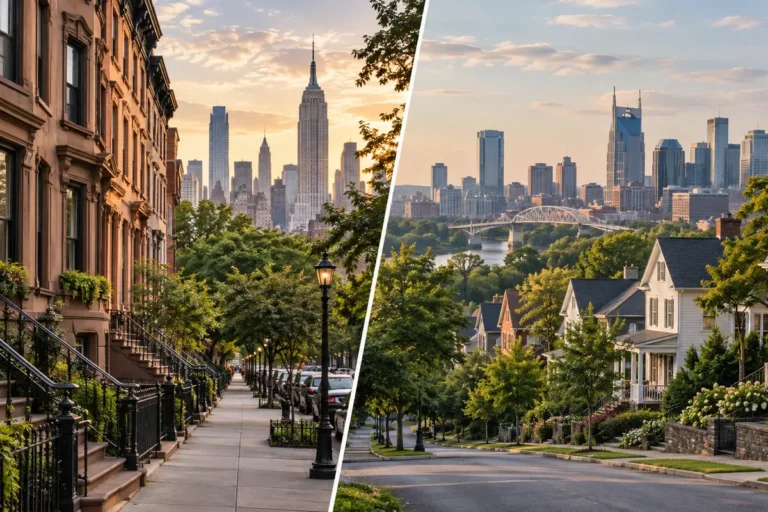
Moving From Las Vegas to Nashville: Complete Relocation Guide

Moving from Las Vegas to Nashville means leaving a compact desert valley for a greener, hillier region spread across several counties. The most important choices are not simply Nevada versus Tennessee. They are humidity versus dryness, grid roads versus corridor travel, desert landscaping versus water and vegetation, and which part of Middle Tennessee fits your work and daily routine.
Last updated: September 15, 2026. Market conditions, insurance costs, taxes, and available homes change. Treat broad comparisons as planning context and verify every important number for the specific address.
I am Harley Pope, a lifelong Middle Tennessee local and Realtor with Pope Real Estate Group at The Baker Brokerage. I help relocating buyers understand the practical differences between Nashville-area communities so the home search is based on real life rather than a familiar city name.
Las Vegas feels like one valley; Middle Tennessee does not
Most of the Las Vegas metro is legible as a valley. The road grid, mountain edges, and concentrated development give buyers a clear sense of where one part of town sits relative to another. Middle Tennessee is more fragmented. Rivers, ridges, county lines, older roads, and separate town centers create pockets that can feel close on a map but disconnected in practice.
A buyer moving to “Nashville” might reasonably end up in Davidson, Williamson, Rutherford, Wilson, Sumner, Cheatham, Dickson, Robertson, or Maury County. Those places are not interchangeable. The tax structure, utilities, school district, commute, home styles, lot size, and access to services can change with the county or municipality.
| What changes | Las Vegas expectation | Nashville-area reality |
|---|---|---|
| Geography | A broad developed valley bounded by mountains | Rolling terrain with towns and neighborhoods divided by hills, rivers, and rural land |
| Road pattern | Long arterials and a recognizable grid | Interstates, curved local roads, and two-lane routes that vary widely |
| Water | Conservation rules and desert landscaping shape ownership | Rain, drainage, gutters, creeks, humidity, and vegetation shape ownership |
| Outdoor space | Walled yards, pools, hardscape, and low-water design are common | Grass, mature trees, slope, woods, and acreage are more available but require care |
| Taxes | No broad state tax on wage income | No broad state tax on wage income, but a different mix of sales and property taxes |
Choose a destination before choosing a house
The correct side of Nashville depends first on the job site. Someone working near the airport or along the eastern logistics corridors should not casually buy far west of town. A household tied to Franklin or Cool Springs may want to concentrate south. A buyer working remotely has more flexibility, but airport trips, medical care, family connections, and preferred recreation still create a geographic center.
Davidson County offers the closest connection to Nashville’s urban employers and amenities, along with wide variation in neighborhood character and price. Williamson County can be practical for southern employment but may carry a higher purchase price in sought-after areas. Rutherford and Wilson counties contain large suburban markets tied to Interstate 24 and Interstate 40. Sumner County serves the northeast side, while Cheatham and Dickson counties can offer a more rural or small-town direction west of Nashville.
Start with the Middle Tennessee areas directory, then work through the guide to choosing the right Middle Tennessee city. The point is not to collect twenty possible towns. It is to eliminate the places that make your recurring week unnecessarily difficult.

The home itself will ask different questions
Las Vegas buyers often know to examine air-conditioning performance, roof exposure, pool equipment, stucco, irrigation, and homeowners-association rules. Those skills still matter, but Tennessee adds a new group of systems. Gutters, downspouts, grading, crawlspaces, tree coverage, roof drainage, and moisture management move closer to the center of the inspection.
A lush yard can feel almost effortless to someone arriving from the desert. It is not. Grass grows quickly, trees drop leaves and limbs, pests are different, and a shaded slope may hold water. A creek or wooded boundary can be beautiful while also raising questions about flood information, erosion, access, fallen trees, and where the usable part of the lot actually lies.
Construction type varies. Brick exteriors are common, but brick does not remove the need to inspect the underlying structure. Crawlspaces deserve careful moisture review. Slab homes have different plumbing and repair considerations. A basement can be valuable but should be evaluated for water management. On rural property, septic, wells, propane, internet, private roads, and outbuildings require their own due diligence.
New construction needs a location test, not only an incentive comparison
Middle Tennessee has active new-home communities, and builder incentives may catch the eye of a relocating buyer. Compare the entire proposition. Which phase is the neighborhood in? What will be built behind the lot? How does the route handle peak traffic? What are the homeowners-association responsibilities? Is the yard usable? Which options are included, and which appear only in the model?
A temporary interest-rate incentive can improve the first years of ownership, but it cannot repair an unsuitable commute or a floor plan that does not support your life. Compare a new home with resale options using monthly cost, location, lot, construction quality, warranty, future development, and expected maintenance.
Trading desert heat for Southern humidity
Las Vegas and Nashville both experience hot summers, but the heat feels different. Southern Nevada’s extreme heat is dry. Middle Tennessee’s summer brings humidity, warmer nights, thunderstorms, vegetation, pollen, and a longer period when air-conditioning and moisture control work together. A slightly lower temperature does not necessarily feel cooler.
The Las Vegas Valley Water District’s permanent conservation measures reflect the importance of water in desert ownership. In Middle Tennessee, the ownership problem is usually not conserving an outdoor water supply in the same way. It is directing rainfall away from the structure and managing what moisture does to a yard, crawlspace, roof, and mechanical systems.
Spring storms deserve a household plan. Confirm the safest interior location, enable reliable weather alerts, and notice whether cell coverage is weak. Winter is generally mild compared with many parts of the country, but ice can interrupt roads and services because the region is not built around frequent snow events.
The commute will not behave like the Las Vegas grid
Both regions are car-oriented, so Las Vegas movers may expect an easy adjustment. The surprise is how much the route matters. A numbered mileage comparison can hide interstate chokepoints, river crossings, construction, school traffic, or the slow final miles on a winding two-lane road.
Hospitality, health-care, logistics, construction, and entertainment workers should test the schedule they actually keep. A late-night trip may be easy while a weekday afternoon is not. If two household members work on opposite sides of the region, identify the compromise before touring homes. Otherwise the search tends to drift toward whichever listing is most attractive that day.
Airport access also deserves a door-to-terminal test. Nashville International Airport is on the southeast side of the city. A house that is “near Nashville” may still place the airport across the metro. Count parking, traffic, and the return trip after a late flight, not only the map distance.
Taxes may be less different than expected
Nevada and Tennessee are both known for not imposing a broad state individual income tax on wages. Because that headline difference is small, the useful financial comparison moves to other categories: purchase price, property taxes, sales taxes, homeowners insurance, vehicle and commuting costs, utilities, homeowners-association dues, and maintenance.
A desert home with limited landscaping and a Tennessee home on a wooded acre have different ownership budgets even at the same price. Air-conditioning remains important in both places, but Tennessee may add mowing, tree work, gutter cleaning, pest control, drainage improvements, or crawlspace work. Get an insurance quote and tax estimate for the exact property before deciding what is affordable.
Review the buying sequence in my step-by-step Middle Tennessee home-buying guide. It will help you coordinate financing, inspections, appraisal, title, and closing without assuming Nevada practices transfer directly.
Use a decision trip to feel the differences
Spend the first part of the trip learning geography. Drive one urban route, one major suburban corridor, and one small-town or rural direction that fits your budget. Look at grocery access, lot shape, road width, utility lines, tree cover, and how rapidly the landscape changes. Middle Tennessee makes more sense from the road than from a list of ZIP codes.
Tour homes only after you have eliminated unsuitable corridors. Include contrasting property types. A newer subdivision home may reduce initial maintenance but offer a smaller lot. An older Nashville-area home may improve access but need updates. A house farther out may deliver privacy while changing every weekly trip.
Run The Tuesday Test on the final two areas. Picture a normal weekday, not a vacation day. Where do you buy groceries, exercise, meet friends, take children to activities, or reach the airport? How many separate drives does the house create? The answer often clarifies whether more space is actually an upgrade.

Plan the 1,500-mile move with room for uncertainty
A Las Vegas-to-Nashville move is long enough that the moving truck, your travel, the Nevada closing, and possession of the Tennessee home should not depend on one perfect sequence. Build buffers when possible. Desert heat can affect loading at departure, while rain and soft ground can affect unloading or a rural driveway at arrival.
If the Nevada home must sell first, tell the lender and Tennessee agent at the start. Decide whether temporary housing is acceptable and which belongings need to remain accessible. Remote touring can narrow options, but the final evaluation should include surroundings, grade, road noise, utility setup, and the drive to recurring destinations.
The tradeoffs are real
Middle Tennessee offers greenery, four distinct seasons, wooded settings, older town centers, and a wider path to rural property. It also introduces humidity, allergies, storm preparation, vegetation, and less predictable road patterns. Las Vegas may be easier to navigate and maintain outdoors, while Middle Tennessee can offer more variation in landscape and property.
This move tends to work well for buyers who want a greener environment and are willing to learn a different kind of homeownership. It may not satisfy someone who wants desert dryness, low-maintenance landscaping, a valley grid, or immediate access to the specific entertainment and outdoor culture of Southern Nevada.
Frequently asked questions
Is Nashville cheaper than Las Vegas?
Not automatically. Pricing varies widely within both regions. Compare the same type and condition of home, then include taxes, insurance, utilities, commuting, homeowners-association costs, and maintenance.
Will I need flood insurance?
That depends on the property and lender. Review official flood information, drainage, waterways, previous claims when available, and an insurance quote. Heavy rain can matter even outside a mapped high-risk flood area.
Are pools common?
Pools exist, but they are not a default feature across the region. If a pool matters, discuss that early because it can narrow location and inventory. Inspect the equipment and include seasonal maintenance in the budget.
Where should an airport employee look?
Begin with the exact work entrance and shift time. The airport’s southeast Nashville location may point toward Davidson, Rutherford, or Wilson County options, but the correct answer depends on budget and household priorities.
Can I find acreage near Nashville?
Yes, but acreage usually expands the search radius. Verify usability, septic suitability, utilities, internet, access, restrictions, flood considerations, and maintenance before placing value on the advertised number of acres.
How soon should I contact a Tennessee Realtor?
Start before booking a decision trip if possible. A planning call can narrow the region, align the trip with realistic inventory, and identify questions for your lender, insurer, or tax adviser.
For a property-specific budget comparison, read Las Vegas vs Nashville cost of living.
About Harley Pope
Harley Pope is a lifelong Middle Tennessee local and Realtor with Pope Real Estate Group at The Baker Brokerage. He helps buyers relocating from the West understand Nashville-area corridors, property systems, land, utilities, and the daily tradeoffs that listing photos cannot show. His approach focuses on choosing the life a home supports, then building a careful search around it.
Moving from Las Vegas to Nashville: plan your next step
To compare Nashville and the surrounding counties through your work location, budget, and property goals, Contact Harley and Victoria. You can also use the Middle Tennessee relocation guide as your starting checklist.