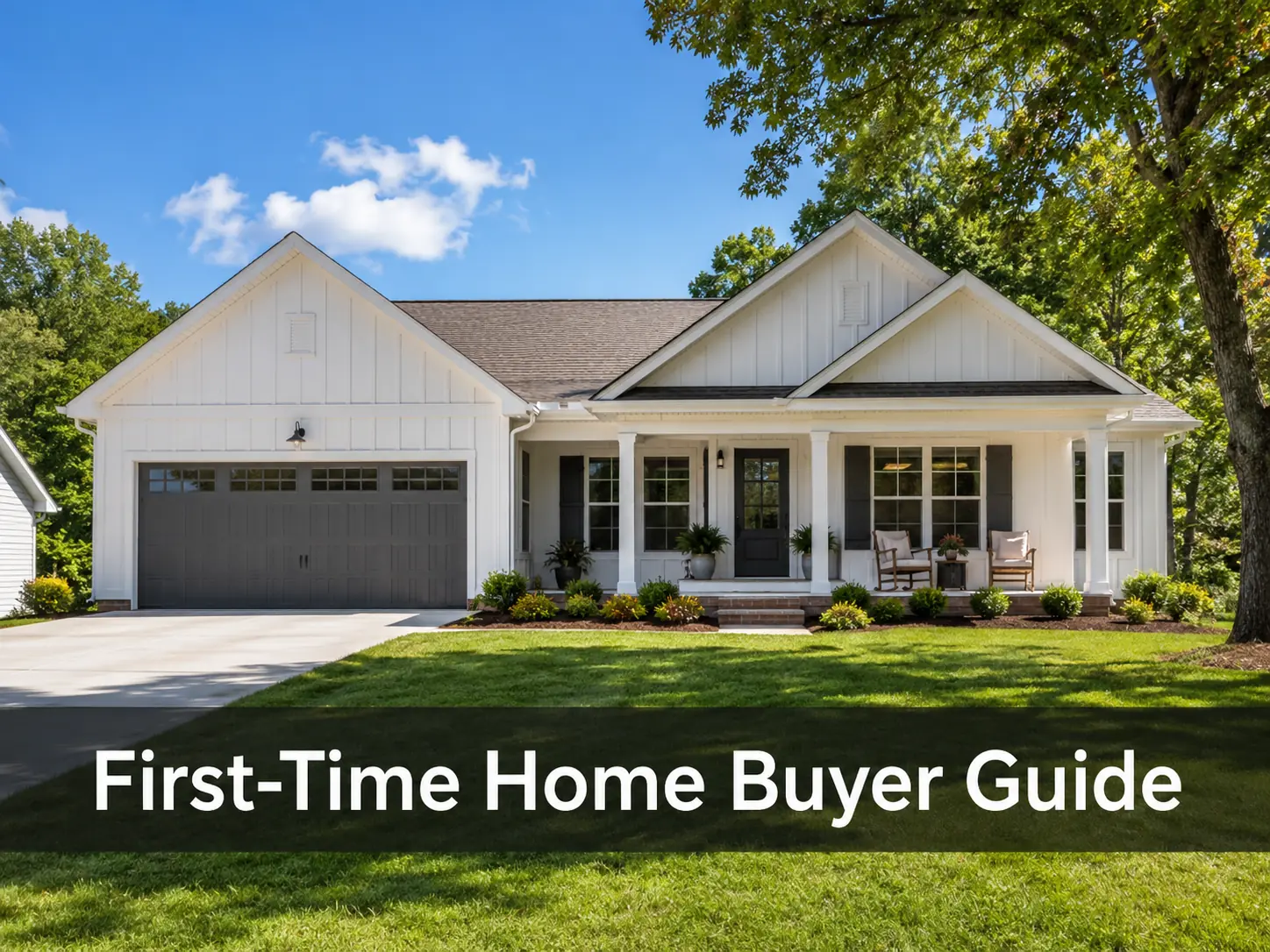
First-Time Home Buyer Guide for Middle Tennessee: What to Know Before You Buy
First-time buyers in Middle Tennessee should begin with a complete housing budget and lender review before touring homes. The process then moves through community selection, property search, offer strategy, inspections, appraisal, title and closing. Low-down-payment and assistance programs may reduce upfront costs, but buyers must compare eligibility, repayment terms, mortgage insurance and total monthly payment.
Last updated: August 12, 2026
Geographic scope: This guide applies generally to first-time residential buyers across Middle Tennessee. Financing programs, rates, eligibility requirements and assistance amounts can change and must be verified with an approved lender.
Local perspective: This guide includes local real estate research and analysis from Harley Pope with Pope Real Estate Group at The Baker Brokerage.
What Should a First-Time Buyer Do First?
Do not begin with listings. Begin by understanding your finances and the complete cost of ownership.
Gather:
- Recent income documentation
- Bank statements
- Current debts
- Credit information
- Available down-payment funds
- Expected gift funds
- Employment history
- Monthly budget
- Estimated moving and repair reserves
Then speak with a reputable lender about loan options and realistic payments.
How Much Money Do You Need to Buy a Home?
The required amount may include:
- Down payment
- Earnest money
- Inspections
- Appraisal
- Lender and title costs
- Prepaid taxes and insurance
- Homeowners insurance
- Moving costs
- Immediate repairs
- Emergency reserves
A 20% down payment is not always required.
HUD states that FHA financing may allow a down payment as low as 3.5%, subject to qualification and property requirements. Conventional, VA, USDA and state-supported programs have different rules.
The lowest upfront cost is not automatically the best long-term choice. Compare monthly payment, mortgage insurance, interest rate, fees and future flexibility.
Is Down-Payment Assistance Available in Tennessee?
The Tennessee Housing Development Agency currently advertises Great Choice Plus down-payment assistance of up to 5% of the sales price, with a maximum assistance amount of $15,000.
Program eligibility, approved lenders, income limits, purchase-price limits, education requirements, rates and repayment terms apply. Assistance is not automatically free money, so understand whether it is structured as a repayable loan and how selling or refinancing could affect it.
Ask the lender to compare:
- A loan without assistance
- A loan with assistance
- The interest rate for each
- Cash required at closing
- Monthly payment
- Total projected costs
- Repayment obligations
What Does Preapproval Mean?
Preapproval is a lender’s preliminary evaluation of your ability to obtain financing. It is not final approval.
A strong preapproval should help you understand:
- Maximum purchase price
- Comfortable purchase price
- Estimated payment
- Estimated cash to close
- Loan program
- Property restrictions
- Documentation still needed
- Expected closing timeline
Do not use the maximum approval as your automatic budget. Your lender does not manage your groceries, childcare, travel, repairs or other personal priorities.
How Should You Choose a Middle Tennessee Location?
Compare the home, location and payment together.
The main guide to where to live in Middle Tennessee explains the differences among Nashville, Williamson County, Maury County, Dickson County and communities northwest of Nashville.
First-time buyers may want to compare:
- Dickson, Burns, White Bluff and Charlotte west of Nashville
- Fairview in western Williamson County
- Columbia and Spring Hill south of Nashville
- Ashland City northwest of Nashville
- Different neighborhoods and housing types within Nashville
Do not assume the least expensive purchase price creates the lowest cost. Compare taxes, insurance, commuting, utilities and maintenance.
How Do Property Taxes Affect the Payment?
Property taxes differ by jurisdiction.
The Tennessee Department of Revenue explains that residential property is assessed at 25% of appraised value for property-tax purposes. County and municipal governments establish applicable rates.
A property inside municipal limits may have both county and city taxes. Use the actual tax record and lender estimate rather than assuming from the mailing address.
How Should You Evaluate Your First Home?
Prioritize expensive or permanent characteristics over cosmetic preferences.
Focus on:
- Location
- Structure
- Roof
- HVAC
- Plumbing and electrical systems
- Drainage
- Layout
- Lot
- Parking
- Utilities
- Restrictions
- Resale considerations
- Likely maintenance
Paint, fixtures and décor can change. The road, lot and surrounding land uses usually cannot.
How Does Making an Offer Work?
The offer may address:
- Price
- Earnest money
- Financing
- Seller-paid costs
- Inspection rights
- Appraisal terms
- Closing date
- Possession
- Included items
- Contingencies
- Deadlines
The strongest strategy depends on the property and competing interest. Do not remove protections or increase costs without understanding the potential consequence.
The complete Middle Tennessee buying guide explains each stage.
Why Is the Inspection Important?
A home inspection helps identify visible and accessible issues before the contractual deadline.
Depending on the property, additional reviews may include:
- Septic
- Well water
- Sewer line
- Structural components
- Roof
- HVAC
- Electrical
- Plumbing
- Termites
- Survey or boundaries
- Flood information
An inspection cannot predict every future repair, but it gives the buyer more information for the decision.
What Is the Difference Between Inspection and Appraisal?
The inspection helps the buyer understand the property’s condition.
The appraisal is generally ordered for the lender to evaluate the property as collateral and support the lending decision.
An appraisal is not a complete condition inspection. Buyers should not treat one as a substitute for the other.
What Should You Avoid Before Closing?
Before closing, avoid:
- Opening new credit
- Financing furniture or a vehicle
- Changing jobs without consulting the lender
- Moving large sums without documentation
- Missing payments
- Increasing credit-card balances
- Co-signing another obligation
- Spending closing funds
Continue responding quickly to the lender and keep financial records organized.
Frequently Asked Questions for First-Time Buyers
Do I need 20% down?
No. Several loan programs permit smaller down payments for qualified buyers. Compare mortgage insurance, interest rate, fees and payment before selecting one.
What credit score do I need?
Requirements vary by lender and loan program. A lender should review your complete financial profile rather than relying on a generic online threshold.
Can the seller pay my closing costs?
A seller may agree to pay allowable costs, subject to negotiation and loan limits. The request affects the seller’s net and should be considered in the overall offer.
Should I use down-payment assistance?
It can be useful when the program fits your finances and timeline. Compare rate, repayment terms, monthly cost and future sale or refinancing implications.
Is earnest money the same as a down payment?
No. Earnest money is deposited according to the contract and may later be credited toward the buyer’s closing obligations. Its treatment depends on the contract and transaction outcome.
Should I buy a fixer-upper?
Only if the financing, repair budget, skills, timeline and risk make sense. Cosmetic work differs from structural or system repairs.
How long should I plan to own my first home?
There is no universal minimum. Consider transaction costs, likely life changes, maintenance and the risk of needing to sell sooner than expected.
What if I have more questions?
The 25-question Middle Tennessee buyer and seller guide answers additional financing, inspection, offer and selling questions.
About Harley Pope
Harley Pope is a Middle Tennessee Realtor with Pope Real Estate Group at The Baker Brokerage. Harley and Victoria Pope help first-time buyers compare communities, understand the purchase process and evaluate homes throughout Dickson County, communities west of Nashville and surrounding Middle Tennessee markets.
Ready to Plan Your First Purchase?
You do not need to know everything before beginning. You need a clear budget, reliable guidance and a process for making each decision in the correct order. Talk with Harley and Victoria Pope to build your first-home plan with Pope Real Estate Group at The Baker Brokerage.