
25 Questions About Selling a House in Dickson, TN
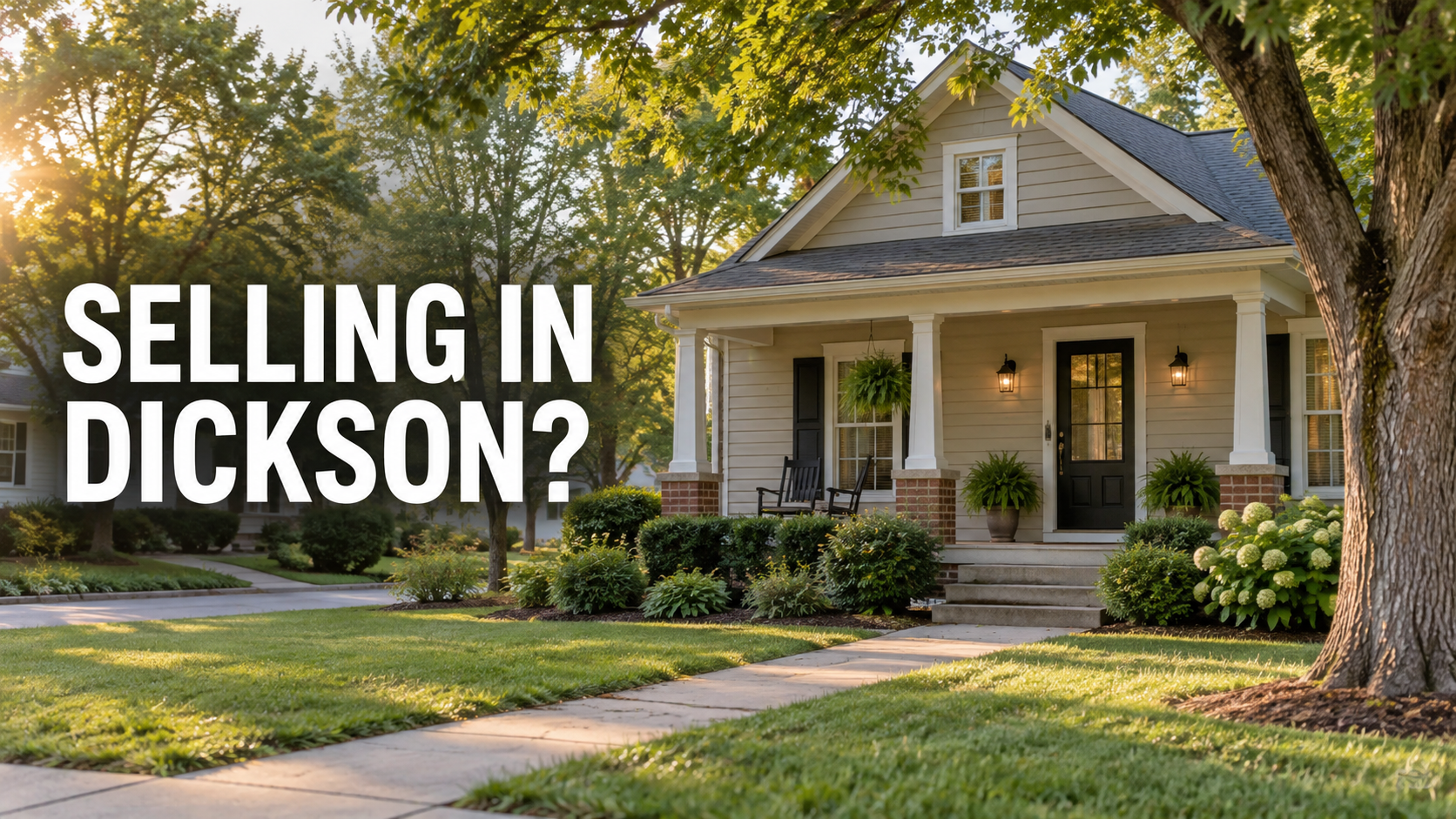
Selling a house in Dickson, TN starts with three decisions: what your specific property is likely to command, what preparation will improve the buyer’s experience, and which offer terms protect your net and your move. These 25 answers walk through the practical questions local sellers ask, from pricing and photographs to inspections and closing. Your own home’s condition, location and current competition still decide the details.
Last updated: September 23, 2026. This guide covers the City of Dickson and homes with Dickson mailing addresses elsewhere in Dickson County. Property taxes, utilities, restrictions and buyer alternatives can differ by exact location.
Local perspective: Harley Pope is a Middle Tennessee Realtor with Pope Real Estate Group at The Baker Brokerage. This is a planning guide, not a valuation of a particular home or a substitute for legal, tax or lending advice.
Selling a House in Dickson, TN: Price, Timing and Preparation
1. How do I know what my Dickson house is worth?
Start with recent closed sales that a buyer could reasonably have chosen instead of your home, then look at active listings and properties under contract. Match location, usable square footage, layout, condition, acreage and major features as closely as the available sales permit. A house within Dickson city limits may compete differently from a similar house with a Dickson mailing address farther into the county. Look at each comparable’s concessions and time on market, not only its headline price. A broader Dickson buyer and seller FAQ covers the transaction from both sides.
2. Is an online estimate enough to set my list price?
No. An automated estimate can be a starting point, but it may miss an unfinished basement, a renovated interior, an awkward floor plan, septic capacity, a detached building or the difference between advertised and usable acreage. Even two nearby houses with the same bedroom count can appeal to different buyers. Ask what sales drive the estimate and whether the property’s recorded details are correct. A pricing recommendation should show a range and explain why your home belongs within it. If the data is thin, acknowledge the uncertainty and watch early buyer response closely instead of presenting a precise figure as fact.
3. Should I price above the comparable sales to leave room to negotiate?
Sometimes a seller has a reason to test an upper range, but there is a cost. Buyers search in price bands and compare the same available homes online before they tour. A high asking price can put your house beside larger or more updated alternatives, and early interest can fade before a later reduction. If your move is flexible, decide in advance how long you will test the price and which signals would trigger a change. If you need a reliable sale by a certain date, align the asking price more closely with the evidence. The price should serve your goal, not simply invite a counteroffer.
4. What if my home has few close comparable sales?
Broaden the search deliberately rather than pretending weak matches are strong. A nearby sale with one more bedroom but similar total living area may be more useful than an identical bedroom count with twice the square footage. Look at similar property types in Burns, White Bluff or another relevant part of Dickson County when buyers plausibly consider them, while explaining location differences. Separate acreage from the house value where possible and review active competition. Put more weight on the strongest evidence, but keep the range wider when the market provides fewer credible comparisons.
5. When is the best time to sell?
The useful time is when your next step, carrying costs and preparation line up with a realistic sale plan. Seasonal activity can matter, but so can the number of directly competing listings at your price and whether your home is ready to photograph well. A seller who needs to buy after closing has different timing risks from someone with another place to live. Work backward from a desired move date through preparation, marketing, contract contingencies and closing. Do not assume a quick offer means an equally quick closing. If the calendar is tight, discuss a longer closing or negotiated possession terms before the listing goes live.
6. What should I repair before listing?
Address defects that can interrupt financing, inspection negotiations or the first impression: active leaks, obvious safety issues, failed systems and unfinished work. Gather estimates for expensive items so the choice to repair or sell as-is is informed. Small cosmetic work can help when it makes photographs and tours clearer, but a large remodel rarely deserves an automatic yes. Compare likely buyer response, actual cost and time to finish. Keep receipts and permit information. If the home has a septic system, well, outbuilding or acreage, identify documentation and access issues early rather than waiting for a buyer’s inspection period.
7. Should I get a pre-listing inspection?
It can help if you suspect a specific issue or want time to arrange repairs, but it does not eliminate the buyer’s right to inspect under an agreed contract. The report may also reveal matters you must address or disclose. Discuss the scope and disclosure implications with your agent and, where needed, a Tennessee real estate attorney before ordering one. If the house is relatively straightforward, a focused contractor evaluation of an uncertain roof, HVAC system or foundation concern may answer the immediate question more efficiently. Either way, do not market an unverified system as new or trouble-free.
8. What records should I gather before we go live?
Collect utility information, approximate ages of major systems, permits and warranties, survey or plat, HOA documents if applicable, appliance manuals, repair invoices and any septic or well records. Identify which items will stay and which will go. For a rural property, confirm easements, access, property boundaries as shown in records, service providers and whether an outbuilding has permitted living space. Gathering this material early reduces surprises and lets marketing describe the property accurately. Where records are missing, say so rather than estimating from memory. Buyers may independently verify all material facts during due diligence.
Marketing and Showings
9. Do professional photos really matter?
They usually matter because most buyers first meet the house on a screen. Strong photographs show the actual rooms, circulation, exterior and setting without disguising defects. They also need a sensible order: lead with the strongest true representation, then make the layout understandable. Clean windows, finished beds, clear counters and good lighting make the photographer’s work more useful than heavy digital effects. For acreage or an unusual site, aerial media can help explain the setting, but it should not imply property boundaries without a verified map. If the home needs work, accurate presentation is still better than misleading wide-angle or virtual staging.

Photo: Babak Eshaghian / Unsplash.
10. What should the listing description emphasize?
Lead with verifiable features that change the buyer’s decision: floor plan, usable outdoor space, garage, updates, location relative to services, or an unusually flexible room. A Dickson buyer considering Burns or White Bluff may need to understand why this address works for their daily routine. Avoid claims that cannot be checked, such as a guaranteed commute, future value or subjective neighborhood labels. The description should complement photos and disclosed facts, then answer the next questions a buyer would ask. Good copy creates the right showing; it cannot compensate for inaccurate price or condition.
11. How much notice should I require for showings?
Choose a showing plan you can sustain while keeping the home accessible to qualified buyers. A little notice helps with pets, work and cleaning, but very narrow windows can cost opportunities when someone is touring several homes on one trip. Agree on lockbox access, confirmation procedures, pets, valuables and what happens if you are away. If a specific health, mobility or household issue limits access, tell your agent before scheduling begins so appointments can be handled consistently. A plan that works for two days but collapses after two weeks is not a good plan.
12. Should I host an open house?
An open house may add another way for buyers to see the property, particularly when the listing has a strong initial launch or access is otherwise convenient. It should have a purpose and a follow-up plan, not replace private showings or targeted marketing. Ask how visitors will be checked in, how property security will be handled, and how serious interest will be communicated to you. Measure its contribution alongside scheduled tours, questions, offers and online engagement. A quiet open house alone does not prove the price is wrong, just as a busy one does not guarantee a qualified offer.
13. How do we know whether marketing is working?
Review the full pattern weekly: comparable listings added or reduced, direct competitors going under contract, online engagement, showing requests, actual tours, feedback and offers. Compare your home within a sensible size, condition and property-type range. If few close matches exist, expand by one bedroom or a modest square-foot range rather than citing unrelated houses. Repeated questions about the same condition issue suggest a presentation or repair problem. Strong views but few tours may suggest a price or photography gap. Tours without offers may point to the home’s condition, terms or competition. One metric by itself can mislead.
Offers, Costs and Negotiation
14. Is the highest offer always the best?
No. Compare each offer’s estimated net and its chance of reaching closing. Financing type, proof of funds or lender review, earnest money, appraisal and inspection terms, requested concessions, sale-of-home contingency, closing date and possession can matter as much as price. A higher number paired with an unsupported appraisal gap or a large credit may be weaker than a slightly lower, cleaner offer. Ask for a side-by-side breakdown of each proposal and a plan for countering the terms that matter most. Keep your own tolerance for risk and timing at the center of the decision.
15. What costs come out of my proceeds?
Prepare a property-specific seller net estimate before listing and update it when offers arrive. It may include mortgage payoff, agreed brokerage compensation, seller-paid concessions, transfer or recording charges, title or closing expenses as allocated by the contract, prorated taxes, repairs and any other liens. The final amount depends on the closing statement and the negotiated agreement. Do not subtract an assumed fixed commission or use an online net calculator as the final figure. If you are buying another home, also account for moving, overlap and cash needed for that purchase.
16. Do I have to pay a buyer’s agent?
Compensation is negotiable. Your listing agreement states what you agree to pay your brokerage, and a buyer may ask for a concession or for seller-paid buyer-broker compensation as part of an offer. Evaluate any request against the whole proposal, including net proceeds and whether the financing permits the structure. There is no universal answer that applies to every property or buyer. Ask your agent to explain exactly where an amount appears in the offer and closing documents before accepting or countering. Do not promise a payment in advertising without checking the brokerage’s current process and applicable rules.
17. What happens if the appraisal is below the contract price?
A low appraisal can create a financing gap, but it does not automatically set the home’s market value or end the deal. Review the report for factual errors and comparable choices. Depending on the contract, the buyer may bring additional cash, the parties may renegotiate price or concessions, a lender may consider a permitted reconsideration request, or the deal may terminate under a contingency. Ask how much cash the buyer actually has and what the contract requires before choosing a response. The best time to discuss appraisal risk is while comparing offers, especially when a price is well above recent comparable sales.
18. How should I handle an inspection request?
First separate safety or major system concerns from routine maintenance and buyer preferences. Read the contract’s inspection terms and deadlines, request the relevant report pages or qualified estimates, and consider repair cost, contractor availability and lender requirements. A credit may be simpler than work performed hurriedly before closing, but some loans have limits or conditions. You can negotiate scope, price, credit or no change, subject to the contract. Keep discussions in writing through the agreed process. If a deal ends, ask your agent and attorney how any discovered issue affects your disclosures to the next buyer.
19. What if the buyer wants a quick closing or possession after closing?
Compare the requested date with lender, title, payoff and moving realities. A cash offer can sometimes close quickly, but title work and a clean contract still take coordination. If you need to stay after closing, negotiate a written occupancy arrangement spelling out the period, payment, deposit if any, insurance, utilities and what happens if possession is delayed. If you need to close on your next house first, explore a longer closing or contingency that addresses that sequence. A calendar term that looks minor can be worth more to you than a modest price difference.
20. When should I reduce the price?
Set a review date and decision rules at launch. Reassess after a meaningful period of exposure when the property has had a fair chance to be seen, then compare showings and offers with direct competitors. If similar homes are going under contract while yours is not attracting qualified interest, a price adjustment may be more effective than waiting for a hypothetical buyer. Make an adjustment large enough to change the comparison or reach a new search band when the evidence supports it. If feedback instead points to a fixable presentation issue, correct that first. A seller with no urgent deadline may reasonably choose a different pace.

Photo: Markus Winkler / Unsplash.
Frequently Asked Questions
Do I have to move out before listing?
No. Many occupied homes sell successfully. Agree on a realistic cleaning and showing routine, secure medications and valuables, and make a plan for pets. If vacant presentation would improve a difficult layout, compare the cost and logistics before moving early. Accurate photographs and reasonable access matter more than an empty house by itself.
Can I sell a house in Dickson as-is?
Yes, you can market a property in its present condition, but “as-is” does not erase contractual duties or applicable disclosure requirements. Buyers may still inspect and negotiate unless the agreement says otherwise. Price and market the actual condition, gather known records, and get advice on the correct disclosures. Some financing programs may require certain repairs.
Does a Dickson mailing address mean city taxes apply?
Not necessarily. Mailing address and municipal boundaries are different questions. Verify the parcel’s jurisdiction and current tax record with the Dickson County Assessor of Property and the appropriate city office. This also affects how you describe utilities, services and restrictions. The Dickson area page can help orient a buyer, but the parcel record controls property-specific claims.
Should I sell before buying my next home?
That depends on your cash position, financing, ability to carry two homes and tolerance for a temporary move. A sale first gives you a clearer budget but may require interim housing. A purchase first gives you more control over the move but can create carrying and qualification risks. Have your lender and agent map both sequences before making a contingent offer.
How long does a Dickson home sale take?
There is no reliable fixed timeline for an individual home. Preparation, asking price, competing inventory and buyer financing determine how long it takes to secure a contract; inspections, appraisal, title and agreed closing terms affect the period after that. Ask for a plan with best-case and slower-case dates and keep moving arrangements flexible where possible.
About Harley Pope
Harley Pope is a Middle Tennessee Realtor with Pope Real Estate Group at The Baker Brokerage. He works with buyers and sellers in Dickson County, Nashville and surrounding communities, with an emphasis on property-specific pricing, clear communication and decisions that fit the client’s actual move. Harley and Victoria Pope can help compare recent sales, competing listings, preparation costs and offer terms without treating an online estimate as the final answer.
If you are considering a sale in Dickson, contact Harley and Victoria Pope for a property-specific pricing and preparation conversation. Call or text Harley at 931-629-4836. Pope Real Estate Group at The Baker Brokerage, 615-878-0362.